Showing posts with label Sweden. Show all posts

Saturday, March 31, 2012

Black, White, Black

Ericsson telephone model DBH 1001, 1932
This bakelite telephone was designed by Jean Heiberg between 1930 and 1932 for Ericsson in Sweden. It was redesigned later to smoother lines, as can be seen below.

Ericsson telephone model DBH15, 1947
Designed in Sweden in 1947, attributed to Gerard Kiljan. These specimens were made in Brazil in the 1960s. The cream one is made of Plaskon (Urea Formaldehyde) and the black is Bakelite (Phenol Formaldehyde), two of the noblest plastics.

Photos by by galessa's plastics @ Flickr

Sunday, November 13, 2011

Too Hard, Too Heavy

Harley Davidson VSC/LC (Landsverk 210)

A Harley Davidson was fitted a armor chassis build to Danish specifications by Landsverk (Sweden) in 1932. This configuration didn't perform well. Hard to steer on-road, and almost impossible to drive off-road due to the heavy chassis. Negotiations were held with Landsverk about a lighter chassis, but without any results and the motorcycle was de-mobbed in August 1933.

Picture courtesy of Ole Drostrup, Soenderborg

Monday, May 16, 2011

Connecting Neutral Capitals

The Aeroflot (USSR) - ABA Aerotransport (Sweden) joint air service timetable cover.
1940

The air liner is Douglas DC-3, of course

Source: Airline Timetable Images

Friday, March 18, 2011

Alessi Cocktail Shaker

Swedish designer Sylvia Stave designed this beautiful cocktail shaker, which was originally manufactured between 1920 and 1930 by the C. G. Hallbergs company of Stockholm.

Source

Thursday, August 5, 2010

Friday, March 19, 2010

The One and Only

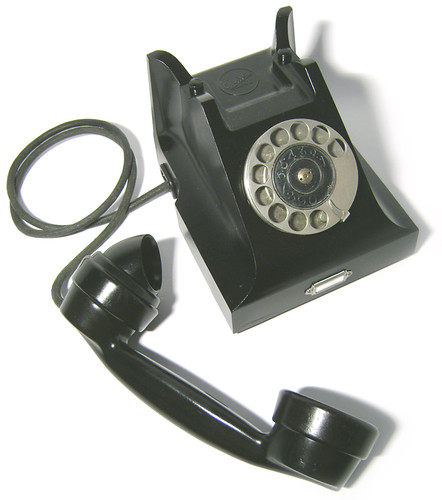
HMS Gotland was a seaplane cruiser of the Swedish Navy built by Götaverken.
The design of the ship started out in December 1926 as a seaplane carrier with room for twelve aircraft. When presented with the design Sweden's Naval Construction Board decided that they wanted the ship to have cruiser and minelaying functions as well as operating as a seaplane carrier. The resulting 5000 ton design presented in January 1927 proved impossible to build within the available budget of Sk16.5 million. The design was then reduced in size requiring one of the forward turrets be removed. The 'extra' guns were then placed in casements either side of the superstructure.
Her aircraft wing consisted of six Hawker Osprey seaplanes. She had capacity for eight and attempts were made to purchase two more, unsuccessfully since they weren't manufactured anymore. The planes were found vulnerable to wave damage during rough weather often forcing the ship to return to port.
During World War II Gotland sighted the German battleship Bismarck when she broke out of the Baltic Sea. That was reported to Swedish Navy headquarters but the message was intercepted by the British embassy which triggered the allied chase, and sinking, of the great battleship.
HMS Gotland was converted in 1944 to an anti-aircraft cruiser due to a lack of modern seaplanes. This involved the removal of the seaplanes and the addition of four 40 mm Bofors guns and two 20mm L/70 guns. The Ospreys continued in service at harbor bases with the last being decommissioned on 2 December 1947.
After World War II she served as a training ship. Starting 1953 and finishing in 1954 she was modified to allow her to serve as fighter direction ship in the event of war as well as a trainer in peacetime. She was decommissioned in 1956, stricken in 1960, sold in 1962 and finally scrapped in 1963.
Source: Wiki (EN) (SE)

Sunday, February 28, 2010

Swedish Gun

Bofors 75 mm L40 M1935 gun
For decades it was the field weapon of the Ejército Argentino (Argentine Army)

Wednesday, January 20, 2010

Wednesday, December 2, 2009

Swedish Armor

The LK-II was designed as Germany's response to the English 'Whippet' tank of WWI. Designed just before WW1 ended, only test models were assembled. In the greatest secrecy, they were imported in parts as steam plates and tractor details. After the reconstruction of the vehicles, trials were held at Svea and Göta Livgarde. The tanks had the designation Stridsvagn fm/22, shortly thereafter being known as Stridsvagn m/21.
Sweden bought 10 tanks in Autumn of 1921. The Strv m/21-29 (9.7 tons, 1 MG, 4-14mm armor, crew of four, Swedish Scania Vabis 1554 85hp petrol engine, 18 km/h) was a modernised version of the normal m/21.

Monday, November 9, 2009

Saturday, October 31, 2009

Friday, October 16, 2009

B-17. Not a Fortress. Still Flying

Swedish Saab B-17 warplane is very different from its American namesake. Developed in late 1930s it was employed by different air forces (Swedish, Finnish, Danish and Ethiopian) in a multitude of roles - from dive bomber to target tug. It was compact, sturdy and could be fitted with every kind of landing gear - wheels, floats, skis. 322 built.
More info (PDF, SE)