Showing posts with label aircraft. Show all posts

Sunday, June 30, 2013

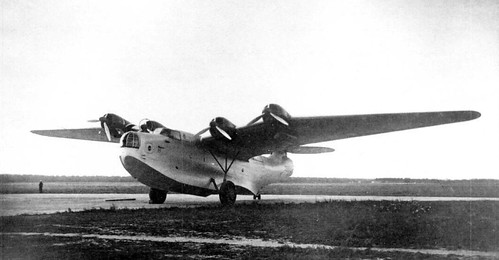
The Cloud


The Saunders-Roe (Saro) A.19 Cloud amphibious flying-boat was produced in two forms: as a civil eight-seater and as a military trainer. In the latter role the RAF received 16 from 1933. The large cabin provided accommodation for eight pupils; six pupils and wireless and electrical equipment, navigation instruments and signalling apparatus; or four.pupils and the above equipment for navigational training. Alternatively, the Cloud could be used for flying training, to simulate the conditions to be met with a larger service type of flying-boat. Power was provided by two 253kW Armstrong Siddeley Double Mongoose engines.

Photos: via amphalon @ Flickr

Saturday, June 29, 2013

Need Gas?

Airship pumping station at Komendantsky airfield near Leningrad
Used during Graf Zeppelin's Arctic Flight
1931

Saturday, June 15, 2013

Thursday, June 13, 2013

Weihe Means 'Harrier'

The Weihe was first flown in 1935 as an advanced training, light transport and communications aircraft for the Luftwaffe, powered by two 179kW Argus As.10G engines. However before the outbreak of World War II Deutsche Luft-Hansa received eight as six-passenger commercial transports.
Armament in the military training version comprised a gunner's turret in the nose (which could be replaced by a metal cone for blind-flying instruction) and an aft gun position. The turret had space for an instructor and pupil for machine-gun and bomb-aiming training.
Two seats side-by-side were provided in the cockpit for flying training, while a bomb trap with sights in a further compartment was provided for bombing instruction.

Saturday, June 8, 2013

People's Glider

The Zögling was a German high-wing, cable-braced, single seat primary glider designed by Alexander Lippisch (later of the tailless jet planes fame) in 1926 and produced by a variety of manufacturers including Piero Magni (Italy).

Image source: Delcampe

Sunday, June 2, 2013

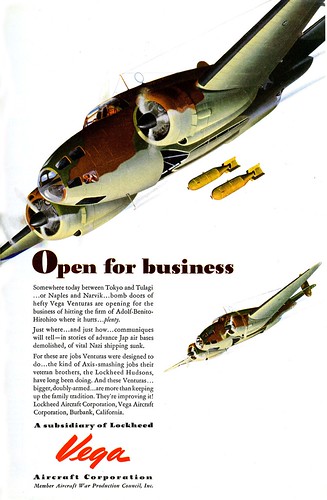
Open for Business

Built by Vega, the Lockheed Ventura was a replacement for the Hudson bomber

Image scanned and restored by Paul Malon @ Flickr

Tuesday, May 28, 2013

The Lady and the Gull

11 Sep 1936, Berkshire, England, UK
Pilot Beryl Markham,
posing for photographer at Abingdon Aerodrome, Berkshire,
prior to take off for her solo flight across the Atlantic.

When Markham decided to take on the Atlantic crossing, no pilot had yet flown non-stop from Europe to New York, and no woman had made the westward flight solo, though several had died trying. Markham hoped to claim both records. On 4 September 1936, she took off from Abingdon, England. After a 20-hour flight, her Vega Gull, The Messenger, suffered fuel starvation due to icing of the fuel tank vents, and she crash-landed at Baleine Cove on Cape Breton Island, Nova Scotia, Canada (her flight was, in all likelihood, almost identical in length to Mollison's). In spite of falling short of her goal, Markham had become the first woman to cross the Atlantic east-to-west solo, and the first person to make it from England to North America non-stop from east to west. She was celebrated as an aviation pioneer.

Info: Wikipedia

Thursday, May 9, 2013

Tuesday, May 7, 2013

Three Little Birds

Air Transport with Junkers Aircraft
1919

An artist's impression of the Junkers F.13

Friday, May 3, 2013

Healthy Atmosphere

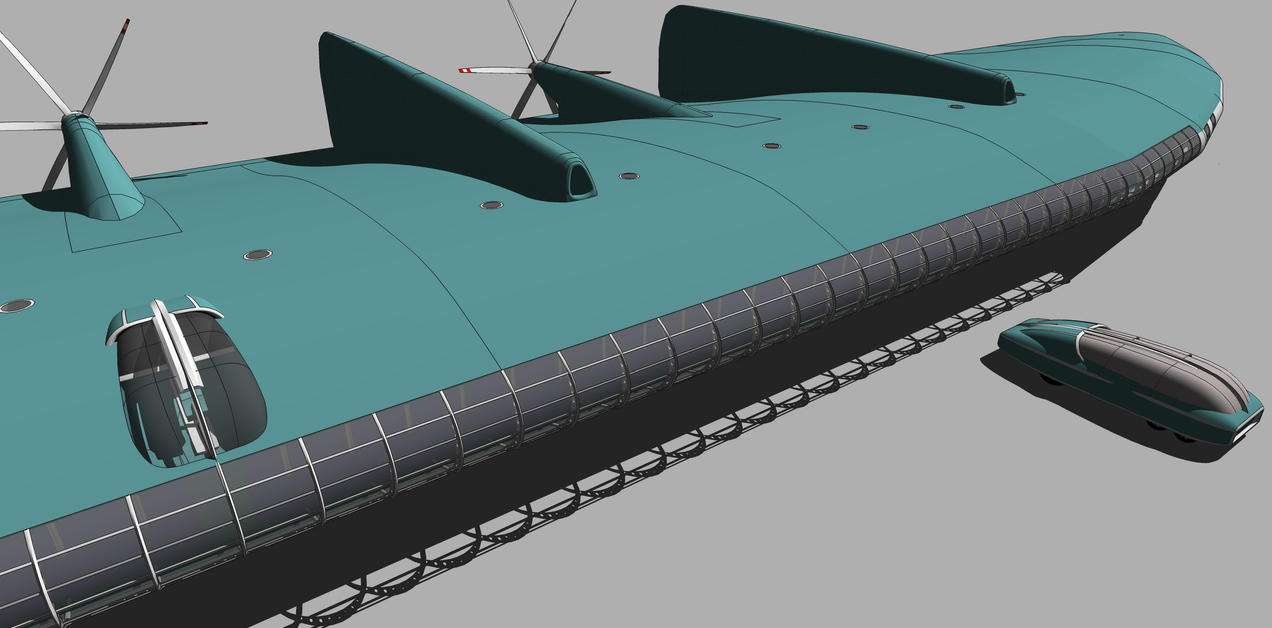
Gigantic buildings connected by wide, suspended roadways on which traffic will speed at unheard of rates... Helicopter planes will take the place of the ground taxi... Many persons will live in the healthy atmosphere of the building tops...
1939

via x-ray delta one @ Flickr

Monday, April 29, 2013

Schneider Trophy!


The Schneider Trophy Contest 1929 - official programme cover

A stirring front cover from the 1929 Schneider Trophy Contest souvenir programme that was produced by Gale & Polden (a major publisher of thing military in Aldershot) on behalf of the organisers the Royal Aero Club. The competition to take the coverted trophy took place over a course across the Solent on England's south coast as illustrated here. It really captures the feeling of excitement that flight had in peoples imaginations at the time - fast, sleek seaplanes speeding through the skies!

The programme is posted by kind permission of Paul Ross.

Text and image: mikeyashworth @ Flickr

Thursday, April 18, 2013

Heavy Seagull

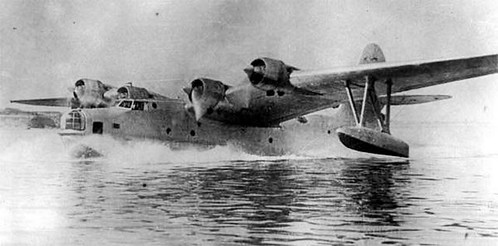
ANT-44 (TsAGI-44, MTB-2) heavy torpedo bomber
It was an amphibian with a retractable wheeled undercarriage, and the floats, mounted near the wingtips on struts, were load-carrying. Powerplants were four Gnome- Rhone 14Krsds, which gave 810hp each, and were conventionally mounted in the wing leading edges. The wings' shape resulted in the ANT-44, as the project was designated, being called the Chaika (Seagull).

Tuesday, April 9, 2013

Wednesday, April 3, 2013

Flying Maybach

Maybach VL-2 12-cylinder 550 hp engines,
built for the Graf Zeppelin airship

Source: Bundesarchiv

Monday, April 1, 2013

A-40 Flying Tank

Yes, it's April Fools' Day, but...

In 1942, a T-60 light tank was converted into a glider intended to be towed by a Pe-8 or TB-3 heavy bomber/transport. The tank was lightened for air use by removing armament, ammunition and headlights, and leaving a very limited amount of fuel. It was fitted with biplane wings and twin-boom tail, designed by Oleg Antonov.
A TB-3 bomber had to ditch the glider during its only flight, on September 2, 1942, to avoid crashing, due to the T-60's extreme drag (although the tank reportedly glided smoothly). The A-40 was piloted by the famous Soviet experimental glider pilot Sergei Anokhin. The T-60 landed on a field near the airdrome, and after dropping the glider wings and tail, the driver returned it to its base. Due to the lack of sufficiently-powerful aircraft to tow it at the required 160 km/h (99 mph), the project was abandoned.

Source: Wiki