Showing posts with label tech. Show all posts
Saturday, June 29, 2013
Thursday, June 6, 2013
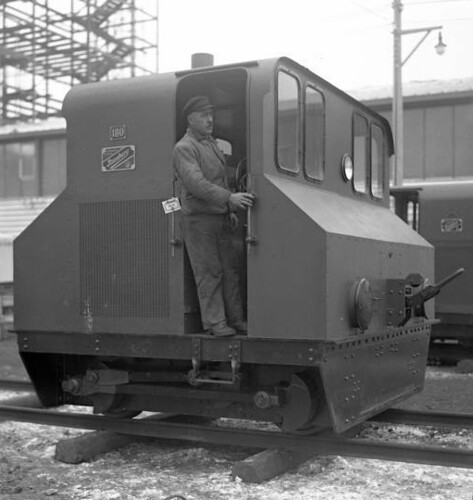
Diesel-Pneumatic
This 4-6-4 diesel-pneumatic loco was designed to solve the problem of power transmission between a diesel engine and the wheels. Time has shown that diesel-electric is the way to go, but in earlier years it was by no means obvious that dragging around a heavy generator and lots of electric motors and associated control equipment was a good idea.
The diesel-pneumatic locomotive was planned in 1924, an order being placed on the 18th September 1924 in response to a quotation made on the 11th April 1924. Construction took five years rather than the planned single year, which indicates some pretty serious technical difficulties had to be overcome.
Completed in 1929, V3201 was the first high-performance Diesel loco on the Deutsch ReichsBahn. It used the MAN Lo6 Vu 45/42 engine, originally developed for use in U-boats. (surprise, surprise) It was a six-cylinder 1000/1200hp engine direct-coupled to a MAN 2-cylinder double-acting single-stage air compressor. Air was delivered at 7 Bar. (102 psi) The design speed was 70 km/hr and the weight in operating condition 70 tons; the maximum axle loading was 18 tons.
The diesel-pneumatic locomotive was planned in 1924, an order being placed on the 18th September 1924 in response to a quotation made on the 11th April 1924. Construction took five years rather than the planned single year, which indicates some pretty serious technical difficulties had to be overcome.
Completed in 1929, V3201 was the first high-performance Diesel loco on the Deutsch ReichsBahn. It used the MAN Lo6 Vu 45/42 engine, originally developed for use in U-boats. (surprise, surprise) It was a six-cylinder 1000/1200hp engine direct-coupled to a MAN 2-cylinder double-acting single-stage air compressor. Air was delivered at 7 Bar. (102 psi) The design speed was 70 km/hr and the weight in operating condition 70 tons; the maximum axle loading was 18 tons.
Source: LOCOLOCO
Thursday, May 16, 2013
Arm and Ventilator
André Kertész
1937
Gelatin-silver print
printed in the 1940s-1950s
30.5 x 26.7 cm
Collection of Eric Cepotis and David Williams
via Art Blart
Tuesday, May 14, 2013
Monday, May 6, 2013
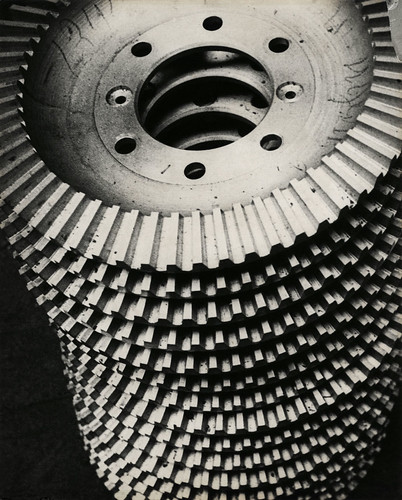
Gears!
Alexander Rodchenko
1929
Gelatin-silver print
28.8 x 23 cm
Private collection
© Rodchenko’s Archive /
2011, ProLitteris, Zurich
28.8 x 23 cm
Private collection
© Rodchenko’s Archive /
2011, ProLitteris, Zurich
via Art Blart
Wednesday, May 1, 2013
Wednesday, April 24, 2013
Tuesday, April 23, 2013
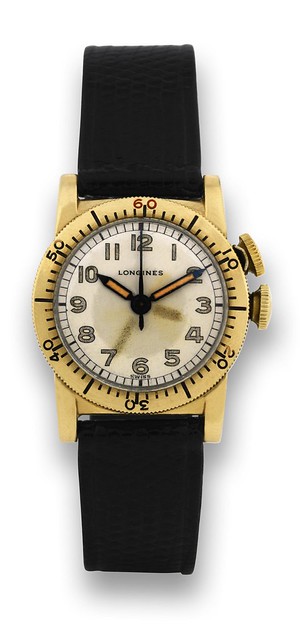
Weems Watch
In 1927 Philip Van Horn Weems, a U.S. Navy officer, devised a watch with a settable second hand that could be
easily corrected to the second using radio time signals. That made it
more useful for air navigation than even precision maritime chronometers
and was the beginning of the aviator's "hack" watch. Longines produced a number of 'Weems Watch' variantions in 1920s-1940s (plus later limited editions, incl. present-day Heritage series).
Wednesday, April 17, 2013
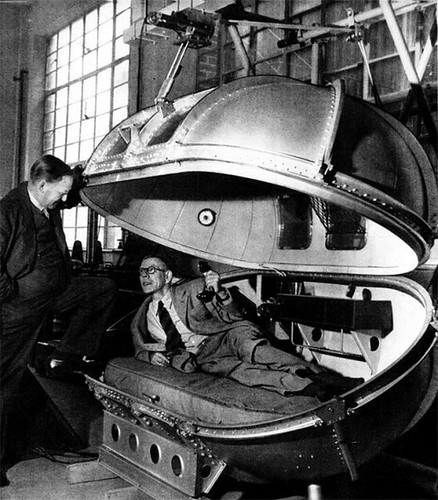
Winston Churchill's Life Pod
This photo comes from a 1947 issue of LIFE Magazine, and the caption explains that Churchill's doctors recommended that he never fly above 8,000 feet. That prohibition wasn't possible, since Churchill often needed to take off for Washington, Moscow, Yalta, or Casablanca on a moment's notice. Fortunately, though, Churchill had a special plane assigned for his transport, so a pressure chamber could be built right into the plane.
The chamber kept the pressure inside the pod at the equivalent of 5,000 feet, while still allowing Churchill to enjoy his favorite vice: a good cigar. The air circulation system was built with the globetrotting smoker in mind.
(io9)
Sunday, April 7, 2013
Wednesday, April 3, 2013
Tuesday, April 2, 2013
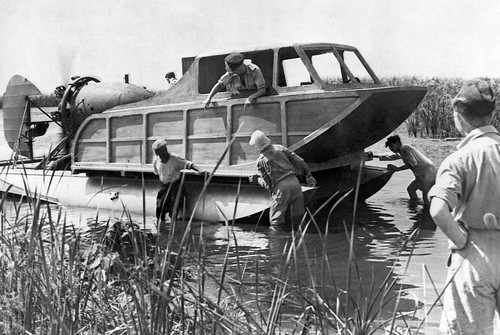
Wingless Hydroplane
This hydroplane is part of the R.A.F. rescue service in the Middle East. It operates on the lakes of the Nile Delta for the assistance of pilots who may make forced landings in the water. Consisting of a cabin mounted on seaplane floats it is driven by an aircraft engine and propeller mounted in the stern and steered by an aircraft rudder. There are also rudders on each of the floats. The top speed of the craft is about fifteen knots. Photo taken on March 11, 1942.
(AP Photo)
Friday, March 15, 2013
Flying Diesel
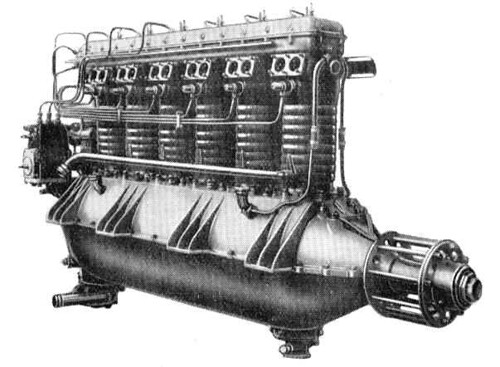
The Fiat A12 petrol (gasoline) engines was converted to a diesel running engine, the AN.1. It had six cylinders of 5.51 x 7.09 in (140 X 180 mm), with a displacement of 1,015 cu in (16,627 cc), producing 180 hp at 1,600 rpm.
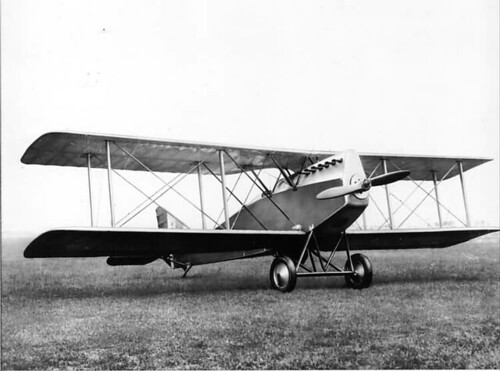
A converted Ansaldo A.300 (also designated Fiat AN.1) fitted with this engine made the first recorded flight of a diesel-engined plane in Italy when it flew from Turin to Rome in June 1930.
Sources:
Thursday, March 14, 2013
Diesel Powered B & A
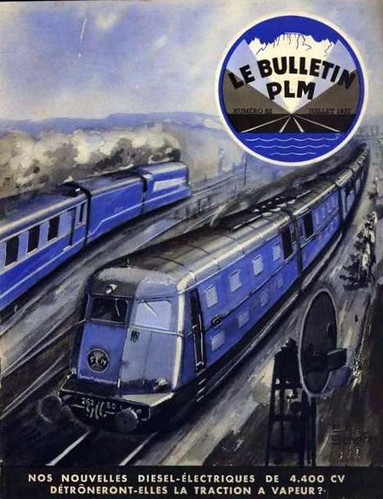
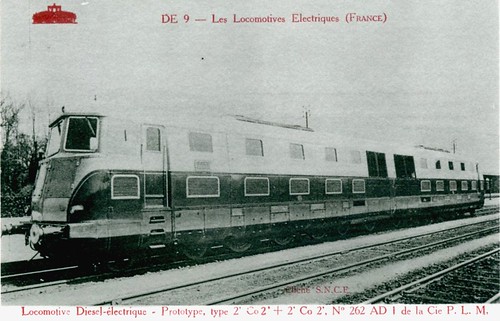
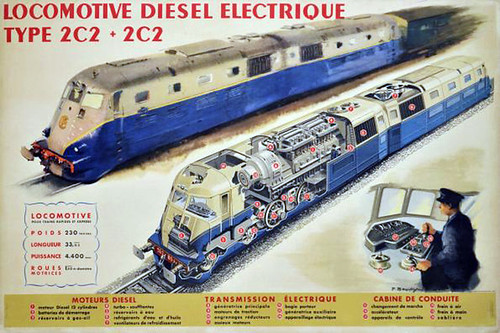
In July 1938 the SNCF put into service a 225 ton twin unit diesel locomotive powered by a pair of Sulzer 12 cylinder twin bank engines.
At the time of construction they were the most powerful engines ever installed in railway traction. The 12 cylinder twin bank engines were each rated at 2,200hp at 700 rpm on the one hour rating. Cylinder size was 310mm by 390mm (12.2in by 15.4in).
Electrical equipment was supplied by les Forges et Ateliers de Constructions electriques de Jeumont, each half unit having a main generator, three traction motors, an axle driven exciter, an auxiliary generator and other subsidiary equipment. The total of six tractions motors are of the four pole series, with forced ventilation, permanently coupled in parallel.
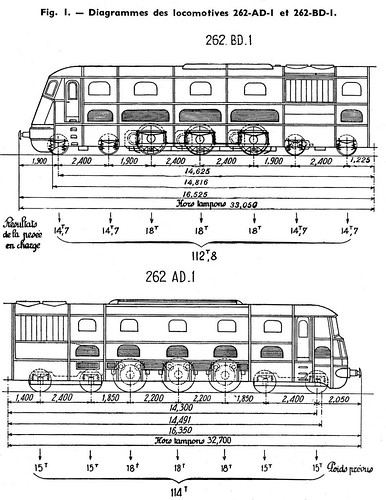
The Sulzer powered 262BD1 was one of a pair of twin units ordered by the PLM, the second twin unit, 262AD1 is shown below, this machine was powered by four MAN 1,050hp engines.
Info: derbysulzers.com
Special thanks to transpressnz
At the time of construction they were the most powerful engines ever installed in railway traction. The 12 cylinder twin bank engines were each rated at 2,200hp at 700 rpm on the one hour rating. Cylinder size was 310mm by 390mm (12.2in by 15.4in).
Electrical equipment was supplied by les Forges et Ateliers de Constructions electriques de Jeumont, each half unit having a main generator, three traction motors, an axle driven exciter, an auxiliary generator and other subsidiary equipment. The total of six tractions motors are of the four pole series, with forced ventilation, permanently coupled in parallel.
The Sulzer powered 262BD1 was one of a pair of twin units ordered by the PLM, the second twin unit, 262AD1 is shown below, this machine was powered by four MAN 1,050hp engines.
Fittings on the locomotives were standardised where possible to keep spares to a minimum, likewise the bodyshells reveal much similarity.
Both twin units were retired from service during 1955.
Info: derbysulzers.com
Special thanks to transpressnz
Saturday, March 9, 2013
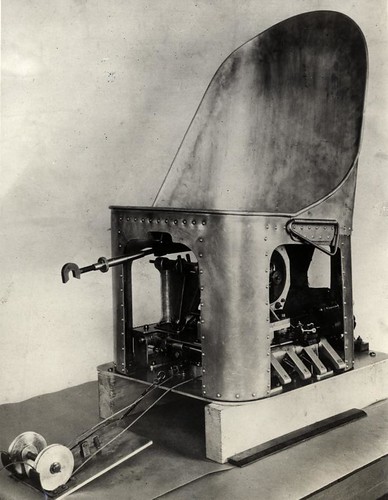
Automatic Pilot
Automatic pilot, beneath the metal chair of the pilot.
The
Netherlands, 1930, location unknown.
Collectie Spaarnestad
Via Nationaal Archief @ Flickr
Tuesday, February 26, 2013
Thursday, February 21, 2013
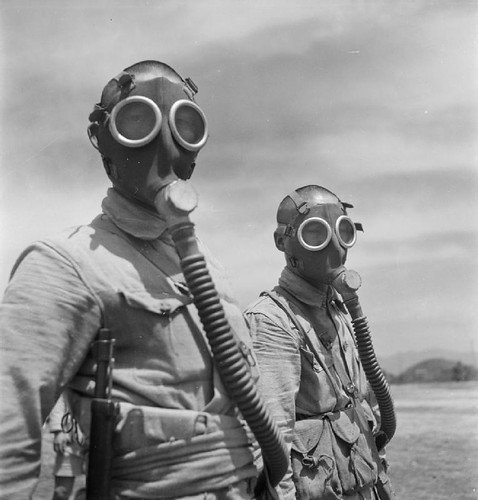
Two Soldiers
Cecil Beaton
Two Chinese soldiers wearing gas masks at Pihu Military Training Centre in South Eastern China
1944
(IWM)
Monday, February 4, 2013
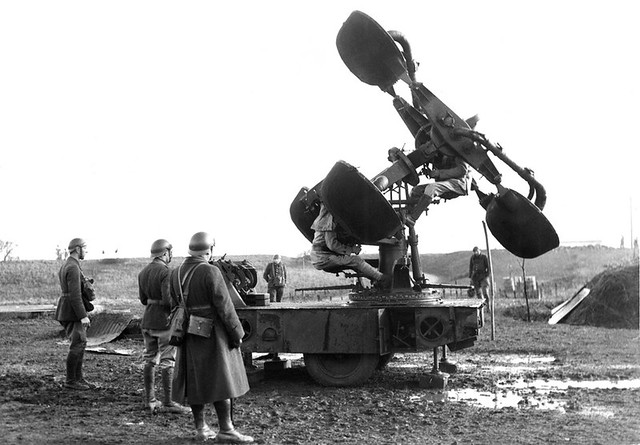
Hear, Hear!
Members of the French Army man an acoustic locator device on January 4, 1940.
The device was one of many experimental designs, built to pick up the sound of distant aircraft engines and give their distance and location. The introduction and adoption of radar technology rendered these devices obsolete very quickly.
Sunday, January 27, 2013
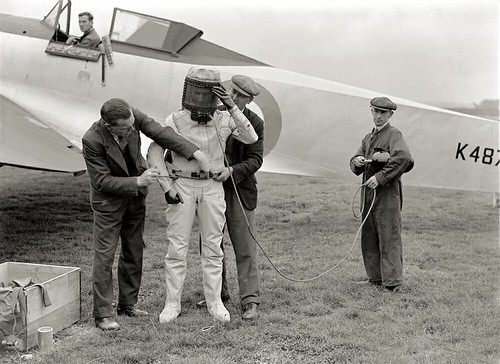
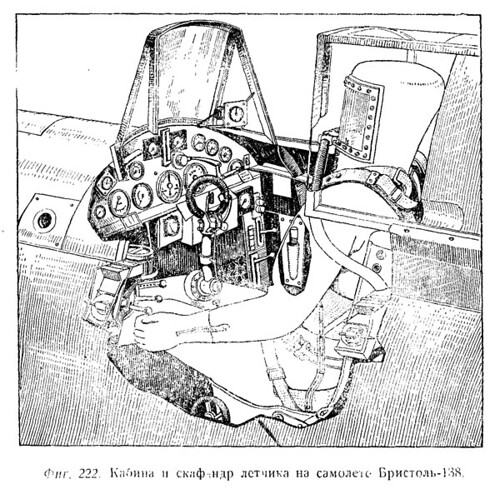
Three in One
The pilot:
Squadron Leader F.R.D. Swain is helped into his high altitude pressure
helmet infront of his charge, the Bristol Type 138A, K4879,
Farnborough, 10 September 1936.
The suit:
The aeroplane:
The Bristol Type 138A, K4879, shows its side profile in the air to the 'Flight' photographer, Farnborough, 10th September 1936.
Via Flight Archive
Saturday, January 19, 2013
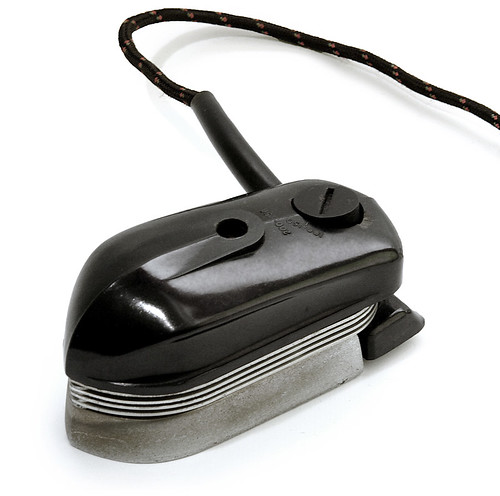
Just an Iron
Streamlined Travel Iron, 1946
With steel base, aluminum heat dissipating fins and Bakelite handle, this midget iron is an English streamlined design produced in many countries, like USA or, in the case of this one, Brazil. Designed by Christopher Kerr, Norman Harry Lucas, Eric Lucas and Harold Thomas Holder.
Photo by galessa's plastics @ Flickr
Subscribe to:
Posts (Atom)