Showing posts with label weapons. Show all posts

Saturday, April 27, 2013

The Torino

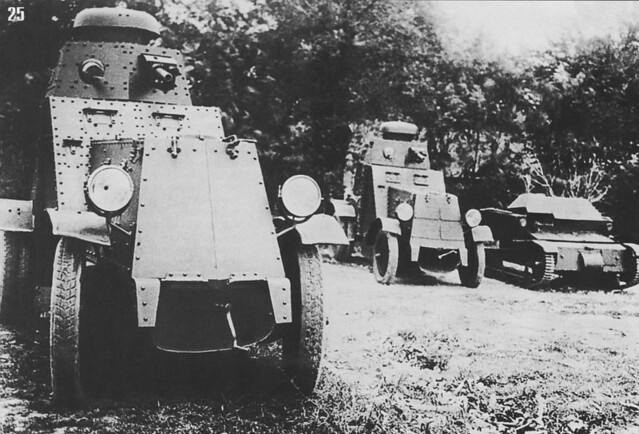
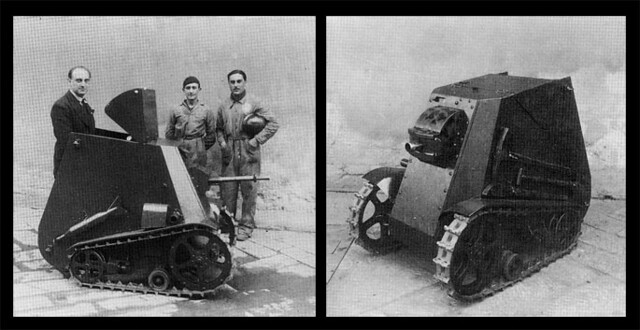
6.9-ton Škoda-Fiat Torino, built on the Fiat 18BL truck chassis and armed by a pair of 7.92mm machine guns, was the first armored vehicle designed and produced in independent Czechoslovakia. 11 vehicles were issued to the Army in 1920.
Due to numerous mechanical failures, they service life was relatively short - most were retired by 1925, the last were scrapped in 1929.

Info & images: Tanks!, valka.cz

Monday, April 1, 2013

A-40 Flying Tank

Yes, it's April Fools' Day, but...

In 1942, a T-60 light tank was converted into a glider intended to be towed by a Pe-8 or TB-3 heavy bomber/transport. The tank was lightened for air use by removing armament, ammunition and headlights, and leaving a very limited amount of fuel. It was fitted with biplane wings and twin-boom tail, designed by Oleg Antonov.
A TB-3 bomber had to ditch the glider during its only flight, on September 2, 1942, to avoid crashing, due to the T-60's extreme drag (although the tank reportedly glided smoothly). The A-40 was piloted by the famous Soviet experimental glider pilot Sergei Anokhin. The T-60 landed on a field near the airdrome, and after dropping the glider wings and tail, the driver returned it to its base. Due to the lack of sufficiently-powerful aircraft to tow it at the required 160 km/h (99 mph), the project was abandoned.

Source: Wiki

Monday, March 18, 2013

Small & Amphibious

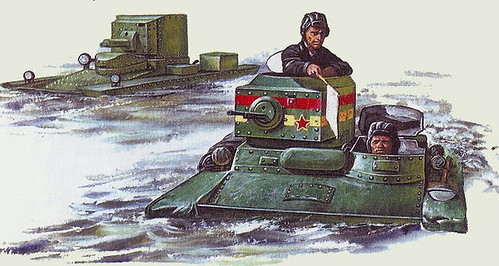
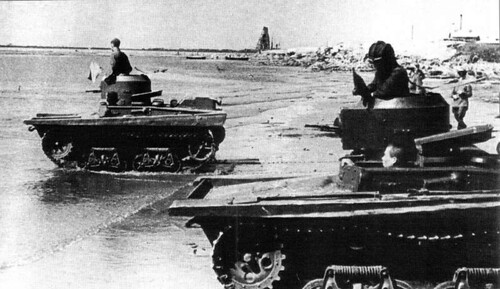
The 3-ton T-37A was the first mass-produced fully amphibious tank. Lightly armored, armed by a 0.3-in machine gun and powered by a 40-hp petrol engine, it was equipped with cork-filled floats. In 1933-1936, 2552 T-37A’s were produced.

Saturday, March 2, 2013

Some Guns

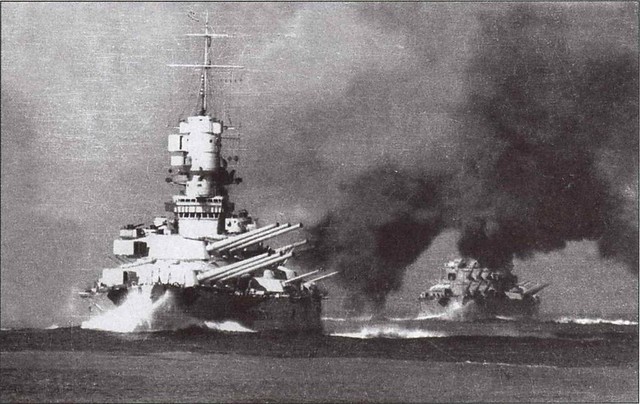
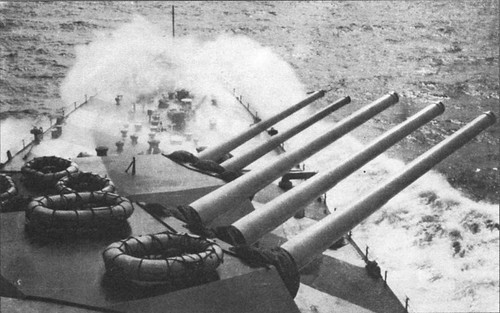
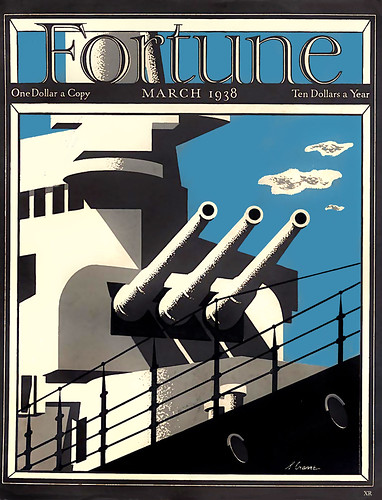
Division 9 Italian battleships at Taranto Gulf, firing in the summer of 1940.
Italian battleship Vittorio Veneto ready to fire her 15 inch guns at British ships at battle of Cape Matapan 28th March 1941.

via tormentor4555, on Flickr

Saturday, February 2, 2013

BB-56

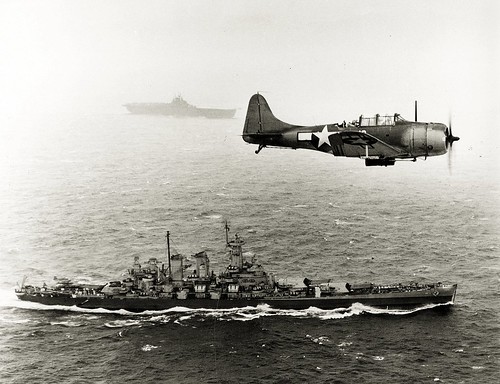
USS Washington, a 35,000-ton North Carolina class battleship, was built at the Philadelphia Navy Yard, Pennsylvania.
She commissioned in May 1941 and was in the Atlantic during "close to war" and wartime operations for more than a year. From April into July 1942 Washington worked with the British Home Fleet in the North Atlantic.
She was then overhauled and sent to the South Pacific, where, in September, she joined U.S. forces engaged in the Guadalcanal Campaign. On 14-15 November 1942, she was flagship of Rear Admiral Willis A. Lee in the last part of the Naval Battle of Guadalcanal. During that night action, her sixteen-inch guns fatally damaged the Japanese battleship Kirishima. 
Washington worked in the South and Central Pacific into 1944. She took part in the invasions of the Gilbert Islands in November 1943 and the Marshalls early in the new year. On 1 February 1944, during the latter operation, she crushed her bow in a collision with the battleship USS Indiana (BB-58). Following repairs, Washington rejoined the fleet in time to participate in the Marianas invasion in June 1944, and in the resulting Battle of the Philippine Sea.
During the next year, Washington took part in operations to capture the Palaus, Leyte, Luzon, Iwo Jima and Okinawa, as well as supporting the fast carriers on their raids throughout the Western Pacific. She was undergoing overhaul during the last two months of the Pacific War and, in October 1945, steamed through the Panama Canal to the Atlantic. Her final active duty was to transport veteran servicemen home from Europe. USS Washington was placed out of commission in June 1947 and was in "mothballs" from then until May 1961, when she was sold for scrapping.

Tuesday, January 15, 2013

Iron Men

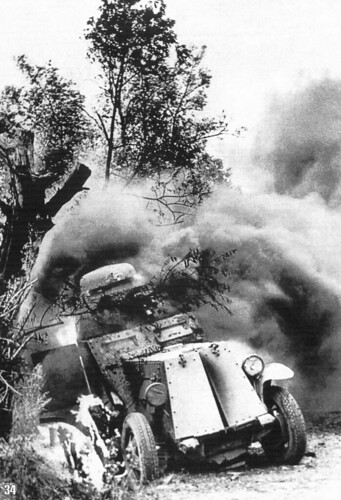
A flood of Russian armored cars move toward the front, on October 19, 1941
(AP Photo)

Friday, November 30, 2012

Hard'n'Heavy

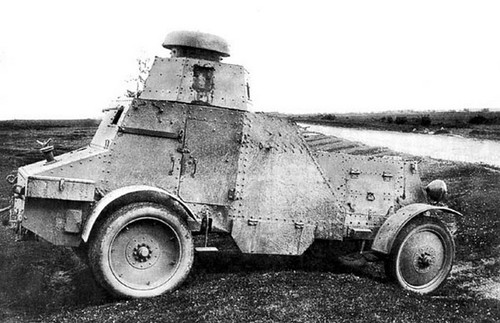
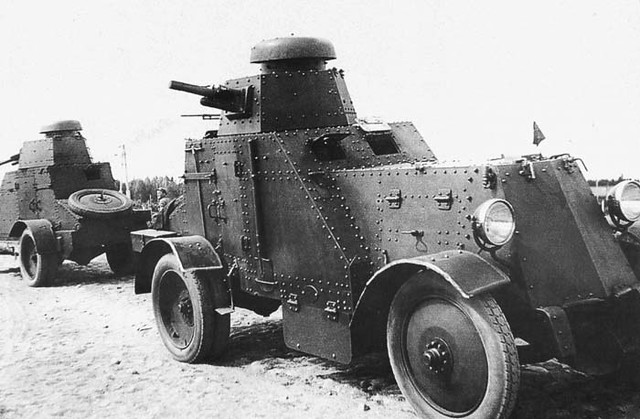
The BA-27 was a Soviet first series-produced armored car, manufactured from 1928 to 1931, and used for scouting and infantry support duties early in the Second World War. The BA-27 was a heavy armored car, having the same turret and armament (37mm gun) as the first Soviet tank, T-18.
The production of the first Soviet truck, AMO-F-15 truck (a copy of the Fiat F-15), started in 1924. Using the chassis of this truck, the Izhorsky Factory design team developed BA-27 heavy armored car in 1927.
After lengthy trials, the new vehicle was accepted into Soviet Red Army service in 1929. 215 were built between 1928–31. The last batch of BA-27 was mounted on Ford Model AA truck chassis. Both chassis were found to be inadequate to carry the heavy armor, and around 20 were later rebuilt on heavier, three-axle Ford-Timken truck chassis at Repair Base No. 2 (Rembaz No. 2), bearing designation BA-27M.
193 of BA-27 and BA-27M still remained in service on June 1, 1941, just before the German invasion of the Soviet Union. During the early stages of the war, several units were captured by Germans and pressed into their own service.
 Info: Wiki

Sunday, November 4, 2012

Wednesday, September 19, 2012

Anti-War Stamps

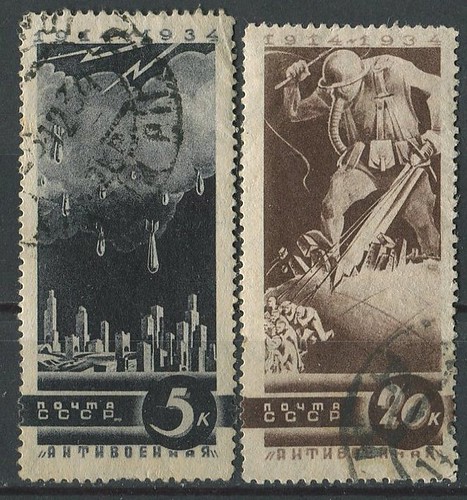
Two stamps of the "Anti-War Series" issued in January 1935 to commemorate the 20th anniversary of WWI.

Designer: I. Ganf

Thursday, September 6, 2012

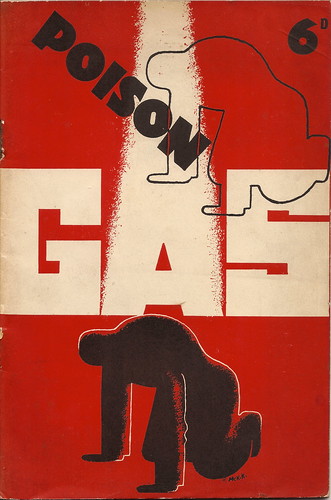
Poison Gas Booklet

A small booklet issued by the Union of Democratic Affairs to illustrate the danger posed by poison gas. the 1930s were jittery years for many as the almost inexorable feeling that war was coming was heightened by written works and films (such as HG Wells The World to Come). This booklet is distinguished by having a cover designed by the well-known artist Edward MacKnight Kauffer. There can be no denying the boldness - and directness of the artwork.

1936

via mickeyashworth @ Flickr

Thursday, August 30, 2012

Unique Item

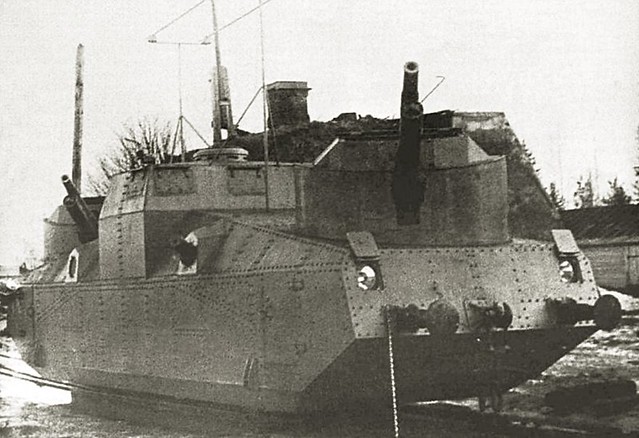
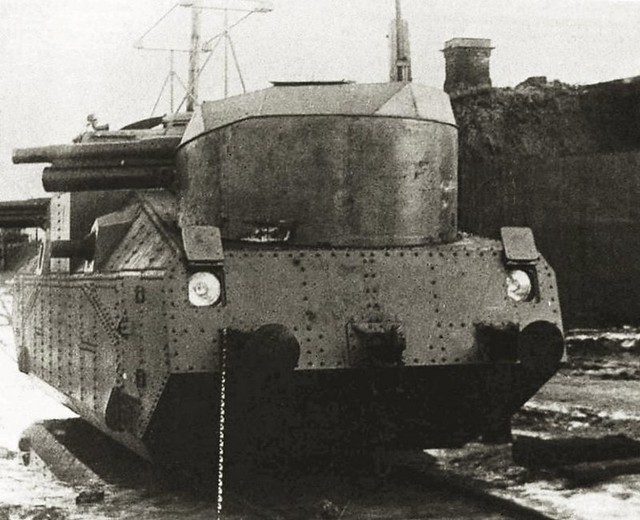
Designed by Nikolai Dyrenkov in 1931-1932, the D-6 armored railcar was powered by a 95hp Hercules engine. It was envisaged as a single-turret 107mm gun carrier. Instead, the car was completed with 76mm guns in two turrets, similar to serial-produced D-2 (another Dyrenkov design) but with different engine/transmission layout. After successful tests in 1933, the D-6 was sent to the Far East. Only one built.

Monday, June 25, 2012

Metal Drake

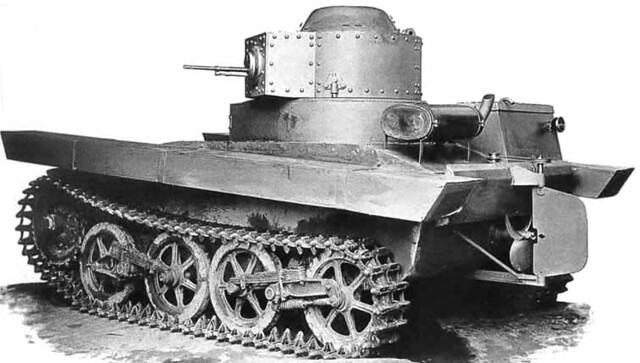
The Carden-Loyd tankettes by Carden-Loyd Tractors, Ltd., were promising enough that the company was purchased by Vickers-Armstrong. They developed light, floating tanks to General Staff requirements (A4E11 etc). In April 1931, Vickers-Armstrongs conducted several successful tests of these light vehicles in the presence of the press. Publication of the design and testing by the press attracted the attention of the Red Army Department of Motorization and Mechanization: the small tank was well suited to the new armament policies of the Red Army, as well as possibly being able to replace the older T-27 tankette, which never performed well in combat.
The Selezen ("Drake", Ru. Селезень) program was established in order to construct a similar amphibious tank with a layout based on that of the British prototype.
The first Selezen prototype, which was designated the T-33, was built in March 1932 and showed good buoyancy during testing.
However, the T-33 did not perform satisfactorily in other tests and was too complicated for the existing military-industrial complex to produce.

As a result, it was not mass produced or equipped in large numbers.

Sources: Wiki (text), Bronetehnika (images)

Friday, June 22, 2012