 Austria, 1934
Showing posts with label Austria. Show all posts
Showing posts with label Austria. Show all posts
Saturday, March 10, 2012

Tuesday, December 20, 2011
Thursday, June 16, 2011
ADMK Mulus
 Produced in 1935, this Austrian wheel-cum-track tankette had the unique arrangement that was able to swing the front wheels upward via gear-driven arms. They then could be removed and put into brackets on the rear of the vehicle.
 The rear wheels could also be removed by driving the tracks up on blocks. A strange feature was that the front arms acted as a framework for the driver's seat.
 Powered by an air-cooled 20 h.p. Daimler engine, it was capable of speeds up to 10 mph on tracks and 27 mph on wheels.
Monday, May 30, 2011
Tuesday, November 9, 2010
Baby Steyr Goes to War
After the anschluss of Austria, the Steyr "Baby" streamline compact car has been converted into a Model 250 Kübelwagen (small personnel transport).
 It retained its conventional layout with rear drive and front-mounted 1158cc water-cooled boxer engine. Suspension and gearbox were altered.
 Between 1938 and 1940, 1200 Steyr 250 cars were produced for the German Army.
 It retained its conventional layout with rear drive and front-mounted 1158cc water-cooled boxer engine. Suspension and gearbox were altered.
 Between 1938 and 1940, 1200 Steyr 250 cars were produced for the German Army.
Friday, October 22, 2010
Alpine Crocodiles
Crocodile electric locomotives are so called because they have long "noses" at each end, reminiscent of the snout of a crocodile. These contain the motors and drive axles, and are connected by an articulated center section. The center section usually contains the crew compartments, pantographs and transformer.
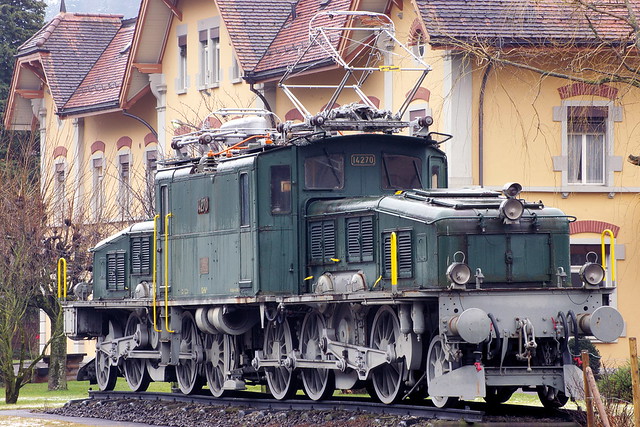 The original "Crocodiles" were the series SBB Ce 6/8 II and SBB Ce 6/8 III locomotives of the SBB, Swiss Federal Railways, built between 1919 and 1927 (above). These locomotives were developed for pulling heavy goods trains on the steep tracks of the Gotthardbahn from Lucerne to Chiasso, including the Gotthard Tunnel.
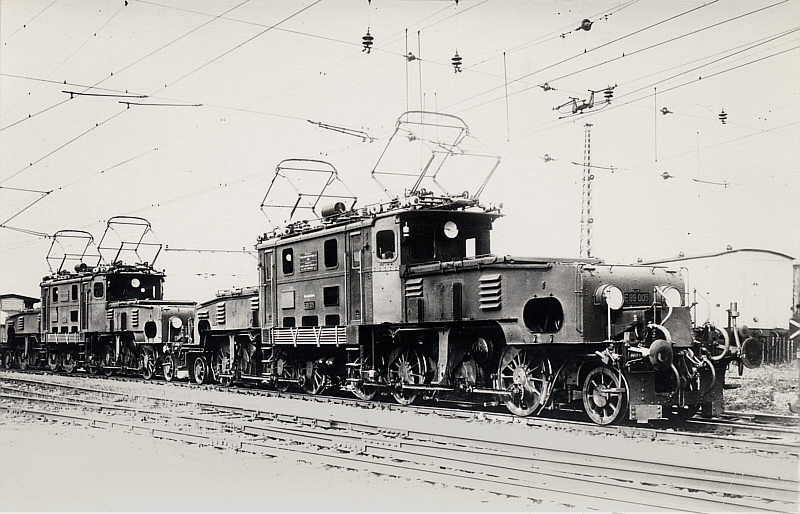
Very similar locomotives were used in Austria as Austrian Federal Railways (Österreichische Bundesbahn) classes ÖBB 1089 and ÖBB 1189 (below), and are often known as 'Austrian Crocodiles'.
The original "Crocodiles" were the series SBB Ce 6/8 II and SBB Ce 6/8 III locomotives of the SBB, Swiss Federal Railways, built between 1919 and 1927 (above). These locomotives were developed for pulling heavy goods trains on the steep tracks of the Gotthardbahn from Lucerne to Chiasso, including the Gotthard Tunnel.Very similar locomotives were used in Austria as Austrian Federal Railways (Österreichische Bundesbahn) classes ÖBB 1089 and ÖBB 1189 (below), and are often known as 'Austrian Crocodiles'.
Images: Chris Walters @ trainspo.com & voba-medien.de
Saturday, October 9, 2010


Saturday, August 21, 2010

Saturday, July 24, 2010
Viennese Tramways
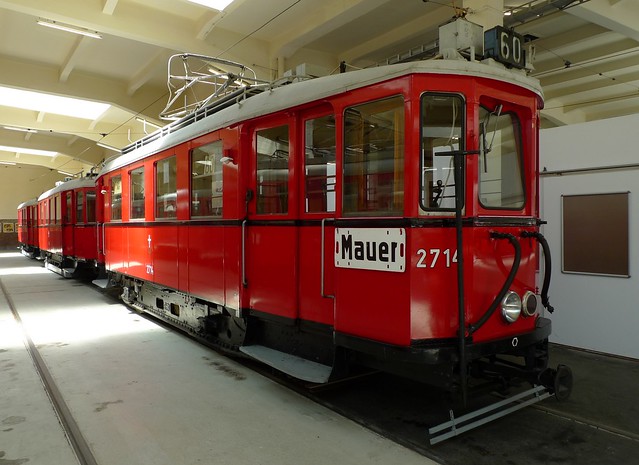 N/n Type was the most technically advanced streetcar in the interbellum Vienna. It was a development of the pre-WWI type designed for Pressburg (today Bratislava). Otto Wagner, the greatest Austrian architect, took part in the Pressburg project.
 In 1925 Vienna Municipality ordered 330 N/n type streetcars.
That's how they looked like in 1927 and 1929.
 After the WWII the type underwent extensive modernization. The cars were fitted with brand-new bodywork but retained their original platforms and engines. This train, N1 - n2 - N1, was rebuilt in 1954.
Tramway Museum, Vienna
photo by Lord K
Wednesday, July 21, 2010
Alpine Power
 Ruetz power station, Tyrol
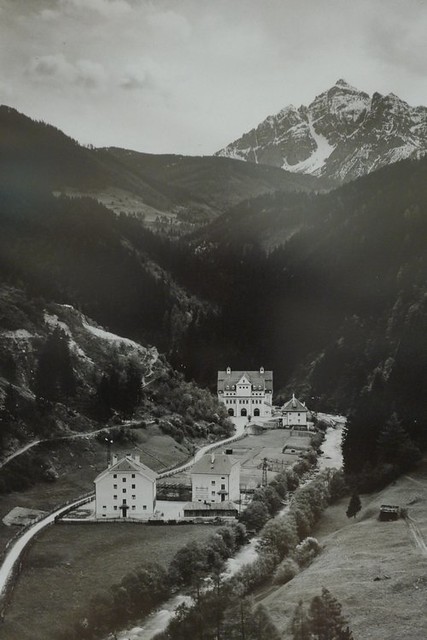 Built in 1924
 Generator preserved in the Technical Museum, Vienna
Photo by Lord K
Monday, July 19, 2010
Wartime Zündapps
 Zündapp KS 750 was a German Army motorcycle that met the following criteria:
• Ability to carry a payload of 500kg (1,102.3lb), the equivalent of three fully equipped soldiers, including arms and ammo.
• It had to cruise at 80kmh (not quite 50mph) and be able to reach 95kmh (not quite 60mph) but also be able to crawl along at 3mph so as not to run over marching troops.
• The tires had to be 5.00in x 16in.
• Minimum ground clearance had to be 150mm (6in) and there had to be enough room under the fenders for snow chains.

 Pictures taken by Lord K at the Auf Rädern und Ketten (On Wheels & Tracks) event, Military Museum, Vienna, Austria
Tuesday, July 6, 2010
Now and Then
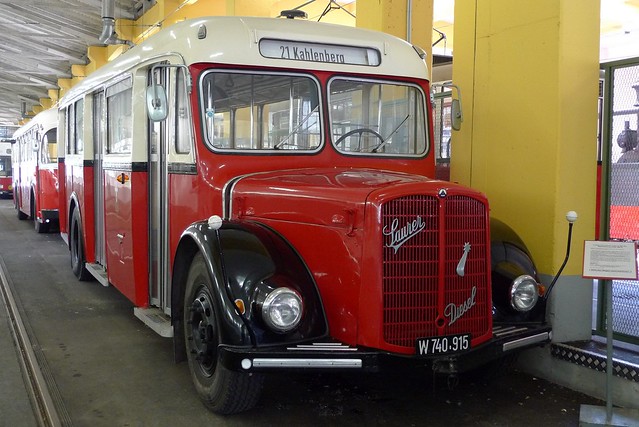 Saurer Diesel 3-door bus in Wiener Linien livery: 2010 and 1954
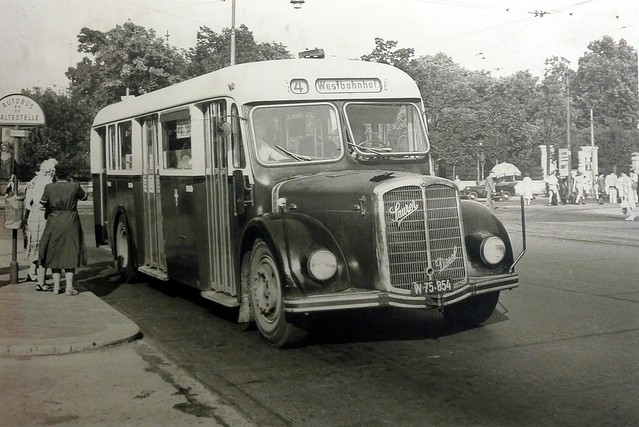 Images: Lord K and Vienna Tramway Museum
Monday, June 21, 2010
Viennese Tower
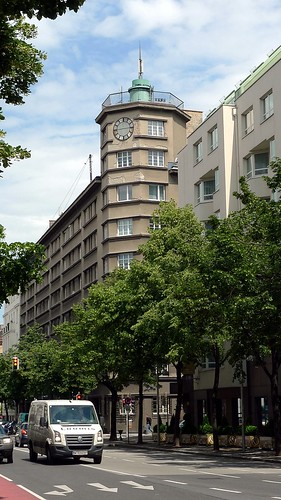
Am Heumarkt / Lisztstrasse
Center: Polizeikaserne (Police Barracks), 1929
Architect: Erwin Böck (1894-1966)
Photo by Lord K
Center: Polizeikaserne (Police Barracks), 1929
Architect: Erwin Böck (1894-1966)
Photo by Lord K
Wednesday, June 16, 2010
Karl Marx-Hof
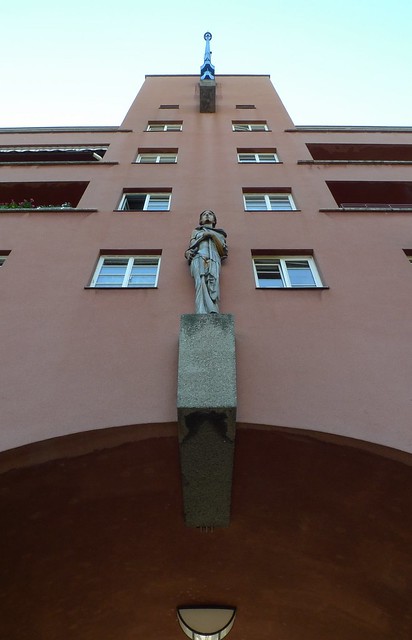 Heiligenstadt, Vienna
Photo by Lord K
Monday, June 14, 2010
Friday, June 11, 2010
Wednesday, June 9, 2010

Tuesday, June 8, 2010

Subscribe to:
Posts (Atom)

 Posts
Posts

