Showing posts with label communications. Show all posts
Showing posts with label communications. Show all posts
Sunday, May 19, 2013

Wednesday, May 1, 2013

Monday, December 24, 2012
Thursday, December 20, 2012
Sunday, December 2, 2012

Saturday, November 24, 2012
No Logo
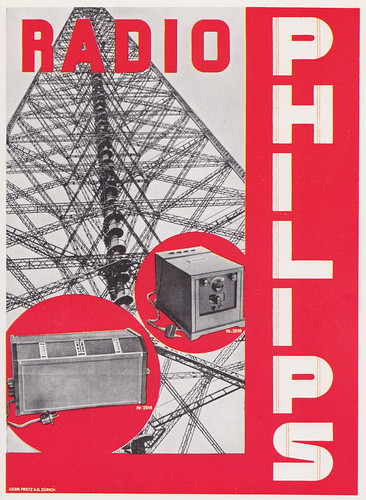
A very striking advert for Philips of Eindhoven, issued for the Swiss
market in the 1930s. Unusually neither the sets nor the advert use the
famous Philips 'wavy line' logo. The design, using photo montage
elements, is very of its period.
Image and text: mikeyashworth @ Flickr
Wednesday, September 19, 2012
Anti-War Stamps
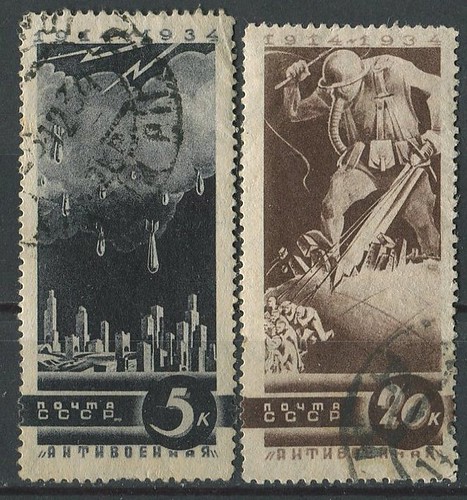
Two stamps of the "Anti-War Series" issued in January 1935 to commemorate the 20th anniversary of WWI.
Designer: I. Ganf
Saturday, September 15, 2012
Steam vs. Electricity
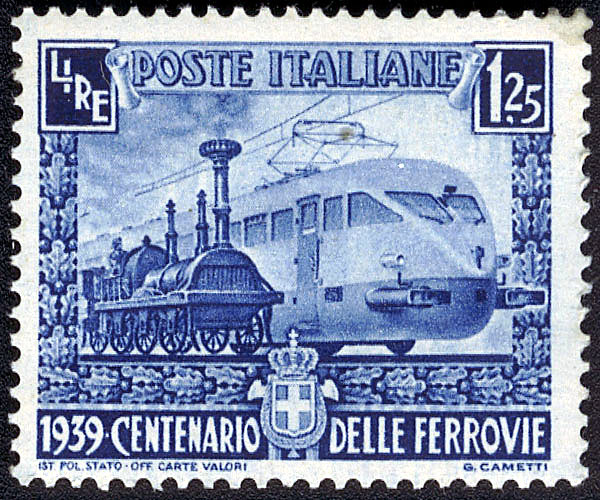
A stamp commemorating the Italian Railways Centennial
1939
The electric train is ETR 200. Read about it on Dieselpunks.org
Wednesday, September 12, 2012
Tuesday, September 11, 2012
Deco Stamps
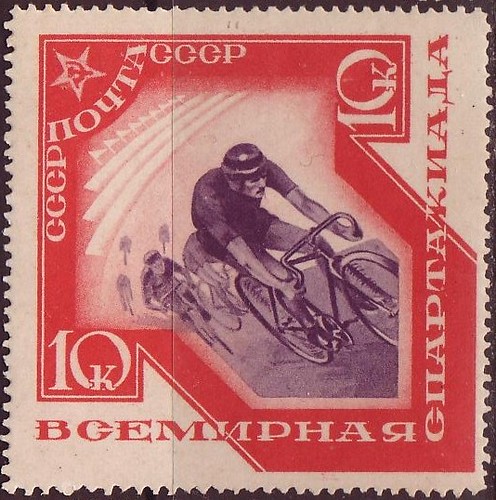
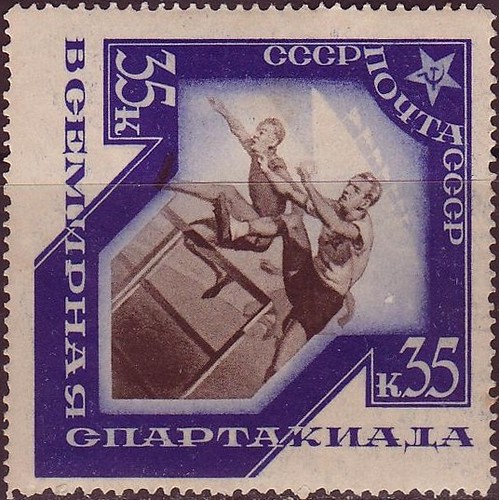
Soviet 'World Spartakiade' series, 1935
Artist: VV Zavyalov
The World Spartakiade games, intended to be a 'proletarian' answer to the 'bourgeois' Olympics, were canceled.
Saturday, September 8, 2012

Thursday, August 16, 2012
Sunday, July 29, 2012
Super-Groom
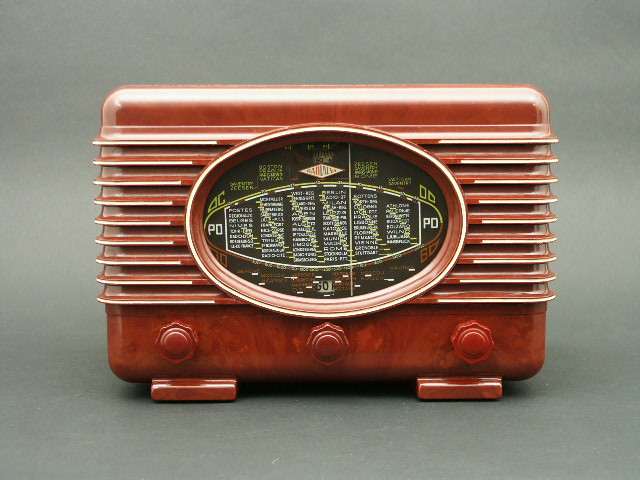
Radialva Super-Groom radio
ca. 1939
- super heterodyne receiver (IF = 472 kHz)
- tube line-up: 6E8G, 6K7, 6Q7, 25L6 and 25Z6
- 3 wavebands: LW (800-2000 m), MW (185-590 m) and SW (15-52 m)
- power: DC/AC
- dimensions: 27.3 x 18.0 x 17.0 cm
Info: Oldradios
Image: Planet Antique Radio
Friday, July 6, 2012

Wednesday, June 6, 2012
Pulse Dialer
The Amtsanschließer 33 was used to connect an army field telephone to the 'conventional' network.

It could also serve as an independent telephone set.

And it can be still used today, with the networks where Pulse Dialing is enabled.

Thursday, May 31, 2012

Wednesday, April 18, 2012
Bakelite Streamliner

Radio Phonola Modello 547
Designers: Luigi Caccia Dominioni, Livio e Pier Giacomo Castiglioni
1940
De Agostini Picture Library
via sapere.it
Monday, April 9, 2012


Saturday, March 31, 2012
Black, White, Black
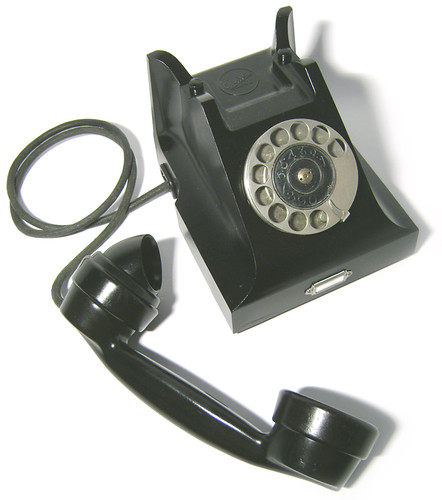 Ericsson telephone model DBH 1001, 1932
This bakelite telephone was designed by Jean Heiberg between 1930 and 1932 for Ericsson in Sweden. It was redesigned later to smoother lines, as can be seen below.
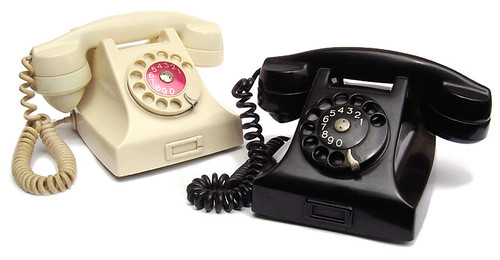 Ericsson telephone model DBH15, 1947
Designed in Sweden in 1947, attributed to Gerard Kiljan. These specimens were made in Brazil in the 1960s. The cream one is made of Plaskon (Urea Formaldehyde) and the black is Bakelite (Phenol Formaldehyde), two of the noblest plastics.
Photos by by galessa's plastics @ Flickr
Photos by by galessa's plastics @ Flickr
Tuesday, March 27, 2012
Radio, Sweet Radio
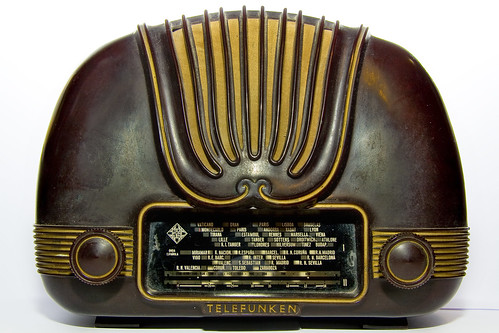 This streamline/deco radio set was manufactured by Telefunken Radiotécnica Ibérica, Spain, since 1954. Its name was Cariño U1465. In Spanish, cariño means "sweety".
Subscribe to:
Posts (Atom)

 Posts
Posts

