Showing posts with label design. Show all posts

Saturday, June 15, 2013

Wednesday, June 12, 2013

Monday, June 10, 2013

Streamlined and Diesel-Powered

Burlington Zephyr luggage label

The Zephyr was a diesel-powered articulated train, built by the Budd Company in 1934 for the Chicago, Burlington and Quincy Railroad. The train featured extensive use of stainless steel, and was meant as a promotional tool to advertise passenger rail service in the United States. The construction included innovations such as shotwelding (a specialized type of spot welding) to join the stainless steel, and articulation to reduce its weight.

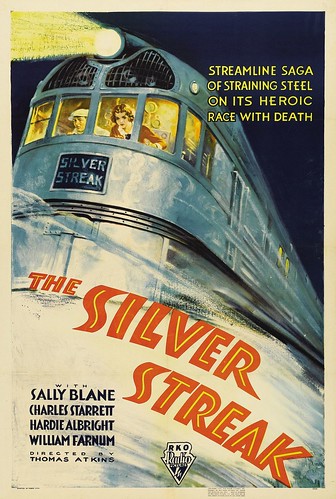
On May 26, 1934, it set a speed record for travel between Denver, Colorado, and Chicago, Illinois, when it made a 1,015-mile (1,633 km) non-stop "Dawn-to-Dusk" dash in 13 hours 5 minutes at an average speed of 77 mph (124 km/h). For one section of the run it reached a speed of 112.5 mph (181 km/h), just short of the then US land speed record of 115 mph (185 km/h). The historic dash inspired a 1934 film and the train's nickname, "The Silver Streak".

Info: Wikipedia

Friday, June 7, 2013

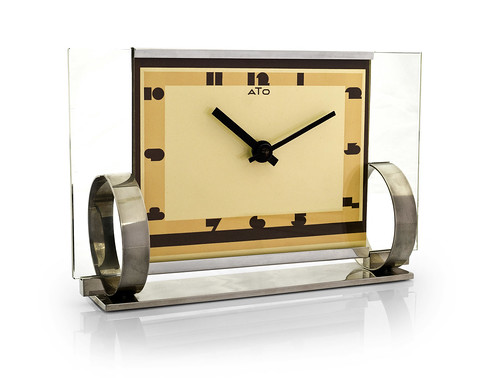
Some Clocks

Vacheron & Constantin / Verger Freres sapphire travel clock retailed by Tiffany c. 1935

Zenith Onyx Boule Desk Clock 1935

Leon Hatot Electric Clock, 1930s

Wednesday, June 5, 2013

Green Coach

Foden Streamliner of Whieldon Green Coaches Company
1934

Photo via Ronnie Cameron, on Flickr

Friday, May 31, 2013

Cyclops!

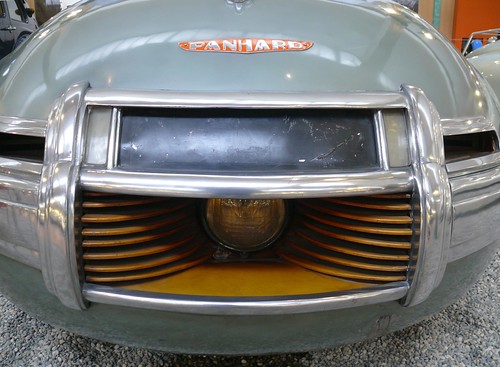
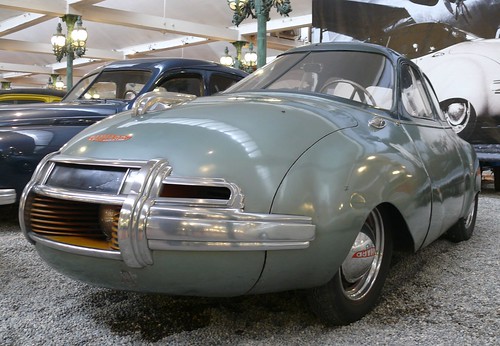
Panhard Dynavia, 1948

Musée national de l'automobile, Mulhouse, France

Photos by stkone @ Flickr

Wednesday, May 29, 2013

Belgian Banana

The Autorail Type 608 was a diesel railcar of the Belgian State Railway (SNCB/NMBS). Six units were built in 1930s by Forges et Fonderies d'Haine-Saint-Pierre, powered by a license-built 370 kW Ganz engine coupled to a mechanical transmission. The railcar took 10 second-class and 54 or 50 third-class passengers. Its maximum speed was 126 km/h, commercial speed - 85 km/h.
The streamline design bears a remarkable resemblance to GWR 'Flying Banana' and ČSD 'Slovenská strela'.

Saturday, May 18, 2013

Exhibition Halls

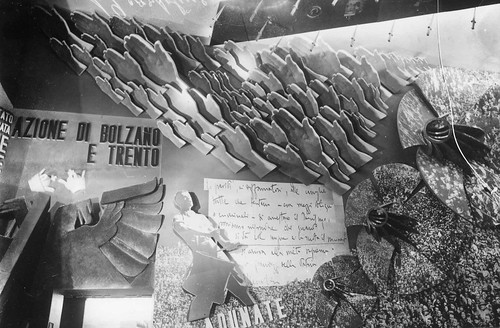
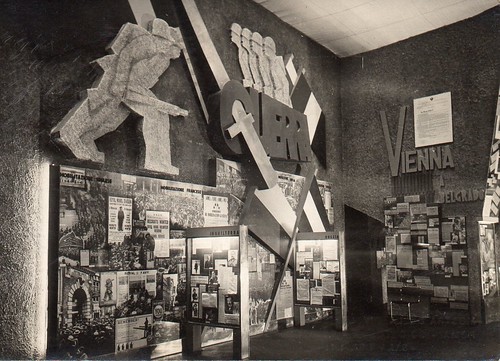
The Exhibition of the Fascist Revolution (Mostra della Rivoluzione Fascista) was a show held in Rome at the Palazzo delle Esposizioni from 1932 to 1934. Opened by Mussolini on 28 October 1932, it had 4 million visitors.

Its director and designer was Dino Alfieri, with the cooperation of Luigi Freddi and Cipriano Efisio Oppo. Seen as a great success, it was repeated in 1937 and 1942, though these two repeats did not have the same public success.

Telling the evolution of Italian history from 1914 to the March on Rome, it was never conceived as an objective representation of the facts or as being solely based on the exhibiting of historic documents, but as a work of Fascist propaganda to influence and involve the audience emotionally. For this reason not only historians were called in to assist in the exhibition, but also exponents of various artistic currents of the era, such as Mario Sironi, Enrico Prampolini, Gerardo Dottori, Adalberto Libera and Giuseppe Terragni.

Info: Wikipedia

Saturday, March 16, 2013

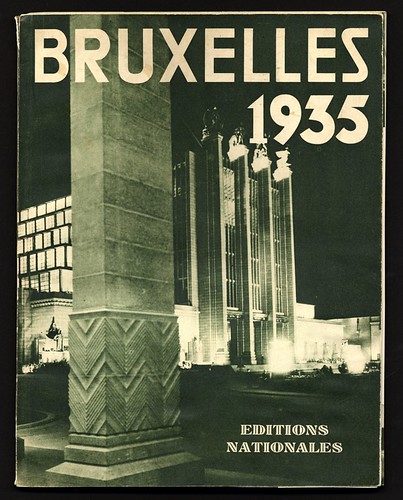
Belgian Deco

René Lyr. A cover for the International Exhibition brochure

(Building in the background - Palais des Expositions, architect: Joseph Van Neck)

Source: Wolfsonian

Thursday, March 14, 2013

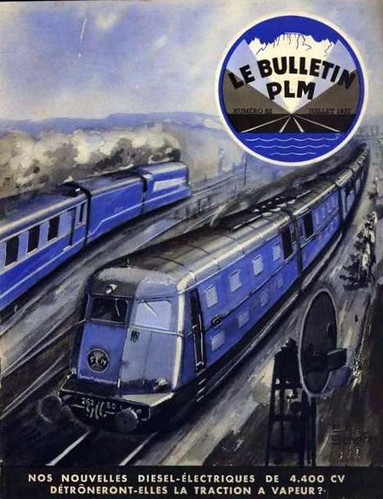
Diesel Powered B & A

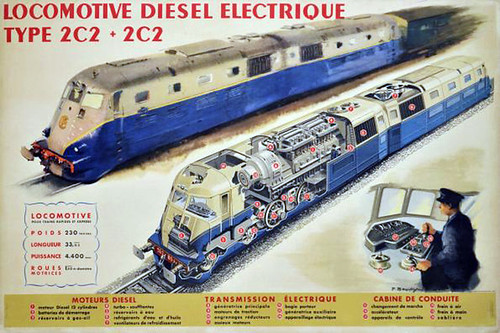
In July 1938 the SNCF put into service a 225 ton twin unit diesel locomotive powered by a pair of Sulzer 12 cylinder twin bank engines.
At the time of construction they were the most powerful engines ever installed in railway traction. The 12 cylinder twin bank engines were each rated at 2,200hp at 700 rpm on the one hour rating. Cylinder size was 310mm by 390mm (12.2in by 15.4in).
Electrical equipment was supplied by les Forges et Ateliers de Constructions electriques de Jeumont, each half unit having a main generator, three traction motors, an axle driven exciter, an auxiliary generator and other subsidiary equipment. The total of six tractions motors are of the four pole series, with forced ventilation, permanently coupled in parallel.
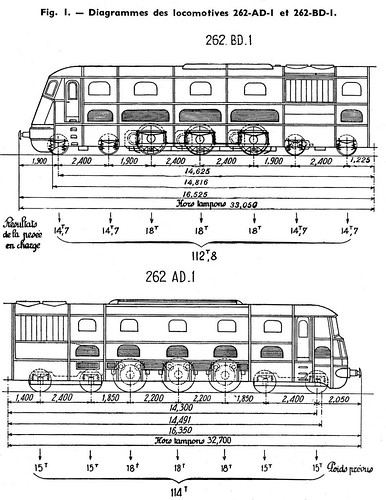
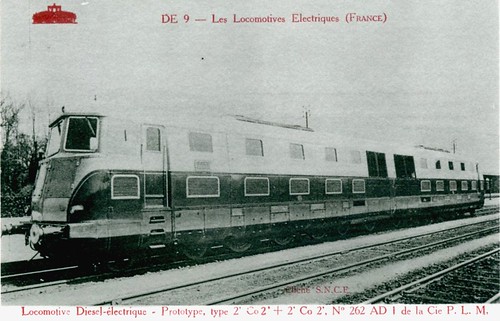
The Sulzer powered 262BD1 was one of a pair of twin units ordered by the PLM, the second twin unit, 262AD1 is shown below, this machine was powered by four MAN 1,050hp engines.
Fittings on the locomotives were standardised where possible to keep spares to a minimum, likewise the bodyshells reveal much similarity.
Both twin units were retired from service during 1955.

Info: derbysulzers.com

Special thanks to transpressnz
Monday, March 11, 2013

Industrial Propaganda

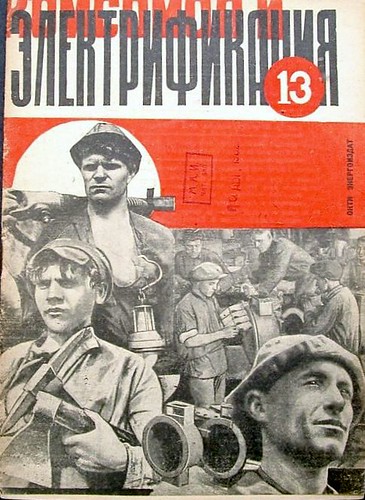
A cover of Komsomol* and Electrification magazine
1932


----------------
* Komsomol = Young Communist League

Friday, March 1, 2013

Hi-Tech Pipe

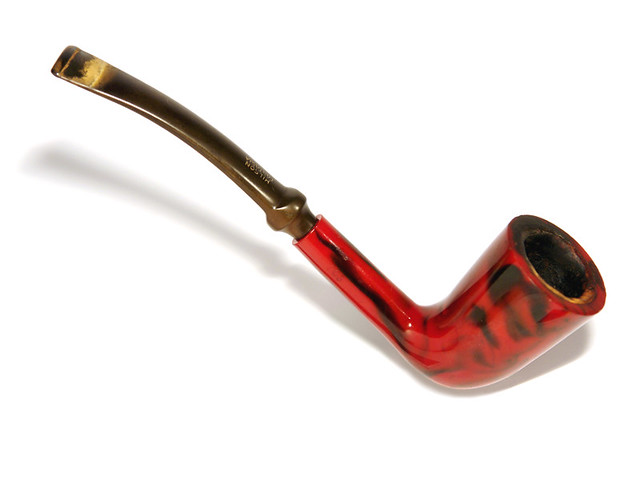
Hilson Fantasia 203 Pipe, 1940s

Made of Polyester resin and Vulcanite (mouthpiece), this pipe comes from Belgium and was probably made in the 1940s or 50s by Hilson.

Photo by galessa's plastics @ Flickr

Sunday, February 24, 2013

Sunday, February 17, 2013

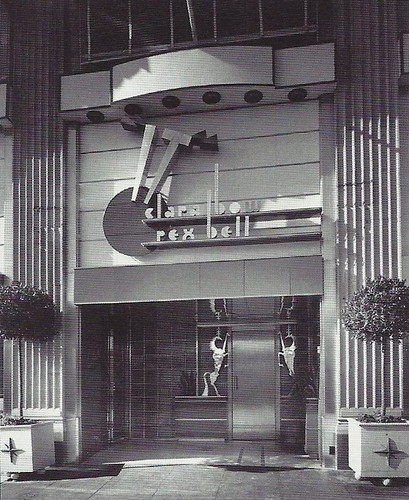
Deco It!

The “It” Café, 1938, managed by Clara Bow and her husband Rex Bell

Saturday, February 9, 2013

All-Steel Streamliner

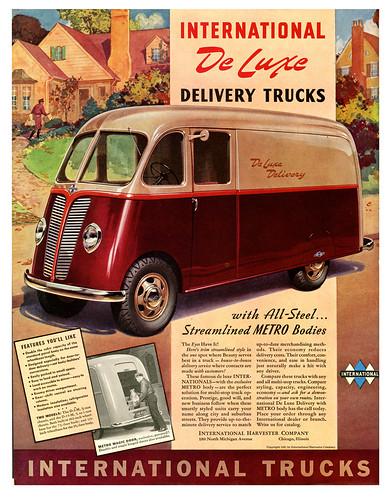
International Delivery Van ad
(ft. the Magic Door!)
1940

Scanned and retouched by Paul Malon @ Flickr

Saturday, January 19, 2013

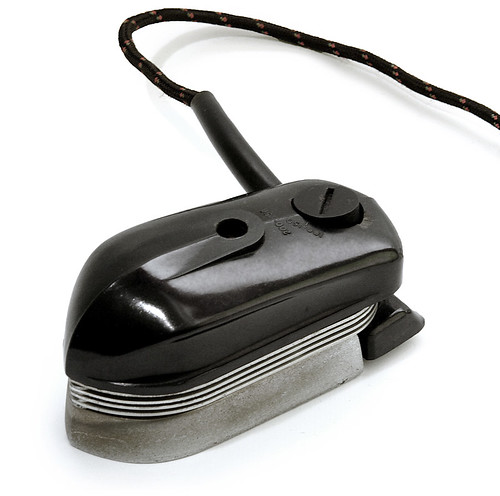
Just an Iron

Streamlined Travel Iron, 1946

With steel base, aluminum heat dissipating fins and Bakelite handle, this midget iron is an English streamlined design produced in many countries, like USA or, in the case of this one, Brazil. Designed by Christopher Kerr, Norman Harry Lucas, Eric Lucas and Harold Thomas Holder.

Photo by galessa's plastics @ Flickr

Sunday, January 13, 2013

Talgo Train

TALGO is the Spanish acronym for "Tren Articulado Ligero Goicoechea Oriol" (Goicoechea-Oriol light articulated train), invented by Alejandro Goicoechea and José Luis Oriol.
Built in 1942, at the "Hijos de Juan Garay" Factory in Oñate (Gipuzcoa), Spain, it broke numerous speed records.

Read about the post-war Talgo II on Dieselpunks.org

Saturday, January 12, 2013