Showing posts with label navy. Show all posts

Monday, July 1, 2013

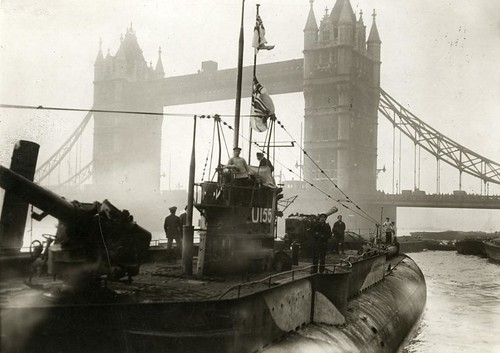
U-Boat in London!

German U-155 (f. Deutschland transport submarine) after surrender
1918

via Nationaal Archief @ Flickr

Sunday, April 28, 2013

German Light Cruiser

Karlsruhe, a Königsberg-class cruiser, launched in 1927
Photographed in 1934


Saturday, April 20, 2013

She's Got the Power

 Surcouf, a 4304-ton French submarine cruiser,  has already been featured here. Just one photo to remind you about her firepower: she was armed with an impressive pair of 203mm (8in) guns, capable (theoretically) to fire 120kg shells at a distance up to 27,500m (14.84 nautical miles).

Thursday, April 18, 2013

Heavy Seagull

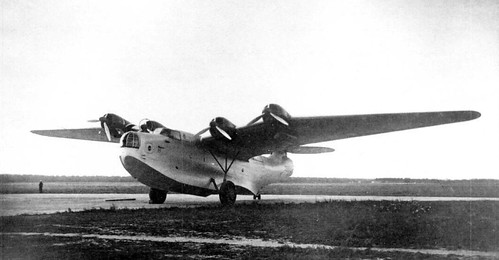
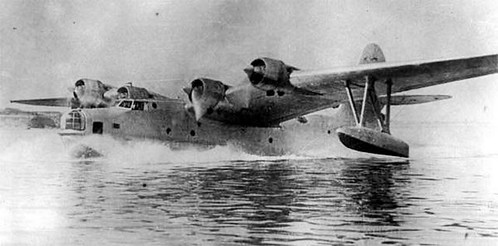
ANT-44 (TsAGI-44, MTB-2) heavy torpedo bomber
It was an amphibian with a retractable wheeled undercarriage, and the floats, mounted near the wingtips on struts, were load-carrying. Powerplants were four Gnome- Rhone 14Krsds, which gave 810hp each, and were conventionally mounted in the wing leading edges. The wings' shape resulted in the ANT-44, as the project was designated, being called the Chaika (Seagull).

Friday, April 5, 2013

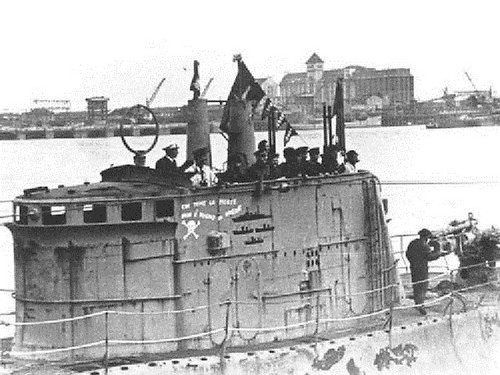
Skull and Bones

Italian Submarine Barbarigo at Bordeaux in the Spring of 1943

via FrigateRN @ Flickr

Read about it (EN)(IT)

Watch the video:

Saturday, March 2, 2013

Some Guns

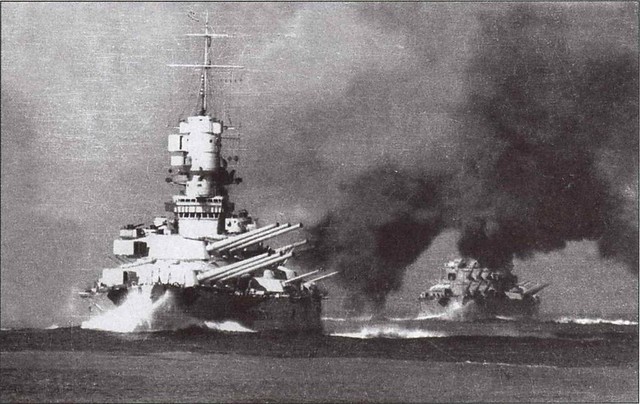
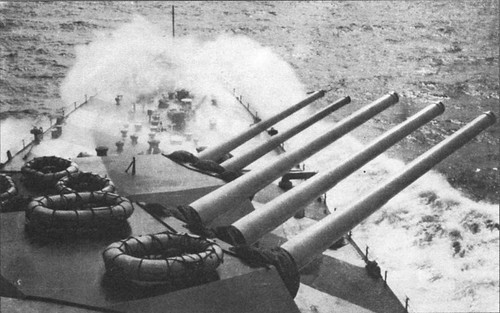
Division 9 Italian battleships at Taranto Gulf, firing in the summer of 1940.
Italian battleship Vittorio Veneto ready to fire her 15 inch guns at British ships at battle of Cape Matapan 28th March 1941.

via tormentor4555, on Flickr

Saturday, February 2, 2013

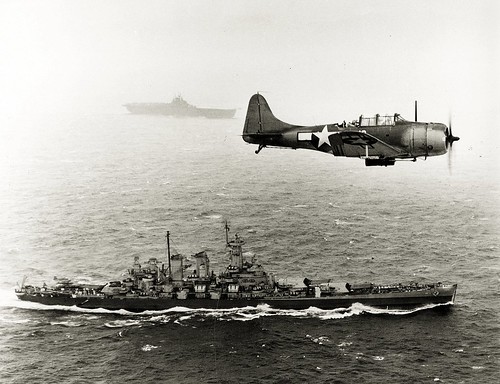
BB-56

USS Washington, a 35,000-ton North Carolina class battleship, was built at the Philadelphia Navy Yard, Pennsylvania.
She commissioned in May 1941 and was in the Atlantic during "close to war" and wartime operations for more than a year. From April into July 1942 Washington worked with the British Home Fleet in the North Atlantic.
She was then overhauled and sent to the South Pacific, where, in September, she joined U.S. forces engaged in the Guadalcanal Campaign. On 14-15 November 1942, she was flagship of Rear Admiral Willis A. Lee in the last part of the Naval Battle of Guadalcanal. During that night action, her sixteen-inch guns fatally damaged the Japanese battleship Kirishima. 
Washington worked in the South and Central Pacific into 1944. She took part in the invasions of the Gilbert Islands in November 1943 and the Marshalls early in the new year. On 1 February 1944, during the latter operation, she crushed her bow in a collision with the battleship USS Indiana (BB-58). Following repairs, Washington rejoined the fleet in time to participate in the Marianas invasion in June 1944, and in the resulting Battle of the Philippine Sea.
During the next year, Washington took part in operations to capture the Palaus, Leyte, Luzon, Iwo Jima and Okinawa, as well as supporting the fast carriers on their raids throughout the Western Pacific. She was undergoing overhaul during the last two months of the Pacific War and, in October 1945, steamed through the Panama Canal to the Atlantic. Her final active duty was to transport veteran servicemen home from Europe. USS Washington was placed out of commission in June 1947 and was in "mothballs" from then until May 1961, when she was sold for scrapping.

Saturday, December 29, 2012

Sunday, November 4, 2012

Tuesday, October 30, 2012

Two Beauties

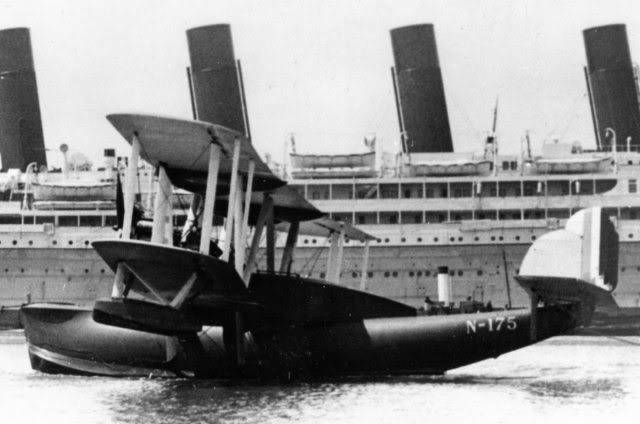
Supermarine Swan flying boat and an ocean liner (most probably RMS Mauretania)

Wednesday, September 5, 2012

Wednesday, August 15, 2012

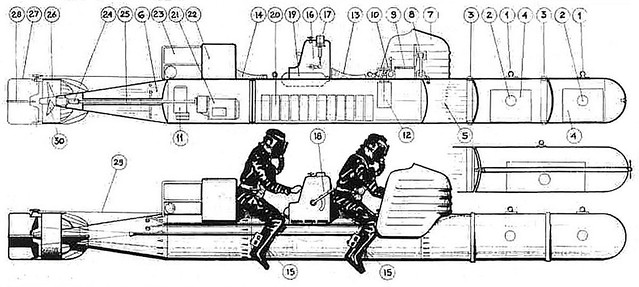
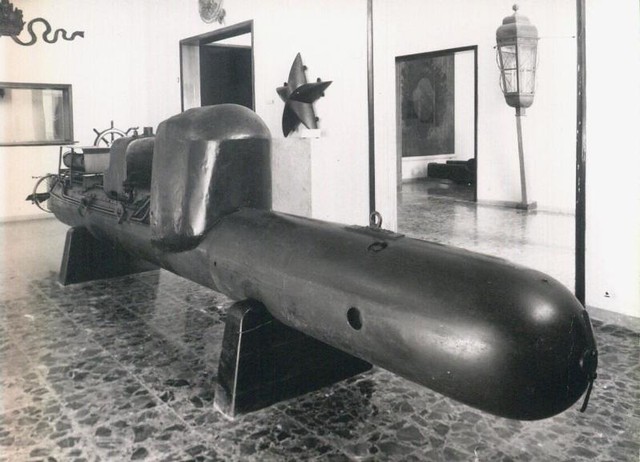
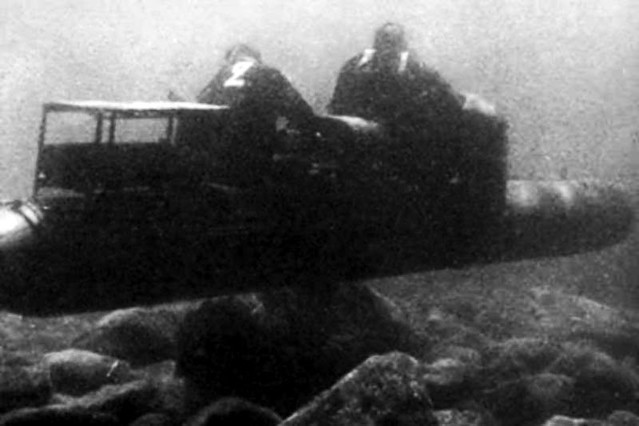
Maiale Human Torpedoes

Initially developed by Italy and later copied by Britain and other countries, they were designed in secret, to sneak up on and attack ships in an enemy’s harbor.

Developed in 1918, by two divers of the Italian Navy-Raffaele Paolucci and Raffaele Rossetti, they rode a primitive manned torpedo into the Austro-Hungarian Naval base at Pola, and sank the Austrian battleship Virbus Unitis and a freighter. Sans breathing gear, they rode in with there heads above water. Both men were discovered and captured, but not before their success.

As a result of this first attempt, the First Fleet Assault Vehicles were formed in 1939, by Major Teseo Tesei and Elios Toschi of the Italian Royal Navy. In 1940, Commander Moccagatta of the IRN, reorganized this group, into the Tenth Light Flotilla of Assault Vehicles aka X-MAS. It constructed manned torpedoes and trained navy frogmen. The IRN X-MAS group attempted an attack on Valletta Harbor in July of 1941, which was a complete disaster and which resulted in the death of Major Tesei.
A better design, was the Italian Human Torpedoes, called Maiale (meaning “Pig,”) as it was slow to steer. Three feet high and 23 feet long, it was electrically powered by a 2 hp electric motor. It had a crew of two, which rode atop the device and had a max. speed of 4 knots. It carried a detachable 300 kg warhead.
By 1941, the first action, to use these secret “human torpedoes,” was the Raid on Alexandria, when Italian forces attacked the Royal Navy in the harbor. The Italian submarine Scire, left it’s naval base, carrying three Maiale’s. They picked up six Maiale crewman on the isle of Leros in the Aegean Sea.
On the 19th of December, the Italian submarine released its compliment of human torpedoes, at a depth of 49 feet and at the distance of 1.3 miles, from the harbor of Alexandria. The Maiale snuck into the harbor, when the British opened their defensive nets to allow the passage of three of their destroyers.
The first vehicle, manned by Italians de la Penne and Bianchi, had engine trouble and had to literally get off and push it. Bianchi then suffered problems with his oxygen supply and had to surface, leaving de la Penne to push the vehicle by himself. Penne accomplished this feat, and successfully made his way to the battleship, HMS Valiant (above), where he placed a limpet mine-a sort of magnetic weapon, which attached to the hull of a ship.
Having to surface, both men were found and captured. The odd part of their capture, was that they came to be confined aboard the very ship de la Penne had mined! Not only that, but they were kept in a compartment under sea level and not far from where the mine was placed. Shortly before the mine was to explode, de la Penne informed the captain of HMS Valiant of the impending explosion. He didn’t’ disclose the location of the bomb, and was sent back to his holding room. Both men survived the explosion without major injury.
In addition to the sinking the HMS Valiant, two other Maiale’s scored similar feats. One sunk the battleship HMS Queen Elizabeth, the stern blown off a Norwegian tanker Sagona, and the HMS Jervis, a British destroyer, was severally damaged. All Maiale crewman had been rounded up and captured, but not before their destruction was complete.
Color photo: Sgt. Mac's blog

Saturday, July 7, 2012

Sub-heavy Cruiser

Almirante Braun cruiser, Argentine Navy

The 6,800-ton Veinticinco de Mayo and Almirante Braun design was derived from the Italian Trento class. The ships were smaller than the original, and carried significantly less armour. They had a clean and simple design, with a length-width ratio of almost 10:1. Three twin turrets were mounted with an elevation of 46 degrees for firing.
The main 190 mm (7.5 inch) guns were designed especially for this class for greater stability (the Trento-class carried 203 mm (8 inch) guns). This could have been a quite powerful gun, but no documents about its characteristics are available in Italian or Argentine archives. The guns had single mounts to simplify construction, and could fire a 90 kg (200 lb) shell up to 23 km (30,000 yards). Despite this reduction in size and weight, they were still too heavy, so the number of turrets were reduced from four to three.
The secondary armament was also a new design, similar to standard 100–102 mm guns of the time. It consisted of twelve 102 mm (4 inch) DP guns, firing a 13.5 kg (30 lb) shell, all in twin mounts. This was an unusual arrangement for Italian heavy cruisers, which generally carried only four to eight of these weapons. However to counter the additional weight, gun shields were removed, which adversely affected their operability in bad weather conditions.
Unusually, the torpedo tubes were in fixed mounts amidships firing abeam, which caused problems in aiming effectively.

Neither vessel played a role in WWII or any other military conflict. Both were decommissioned in 1961.

Image: histarmar.com. Info: Wikipedia

Thursday, June 28, 2012

Fuel in Their Floats

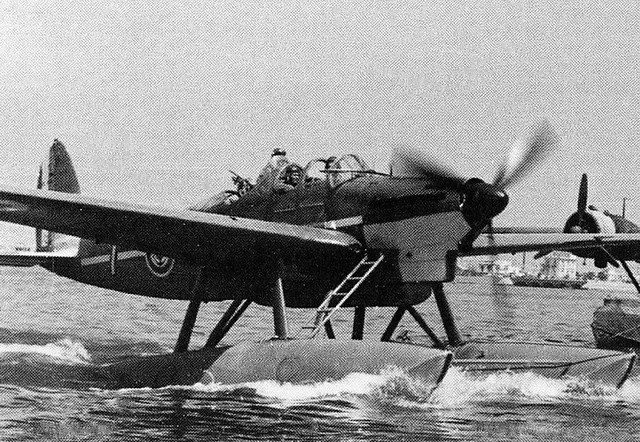
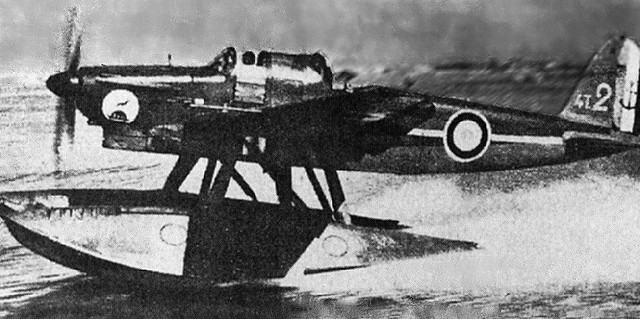
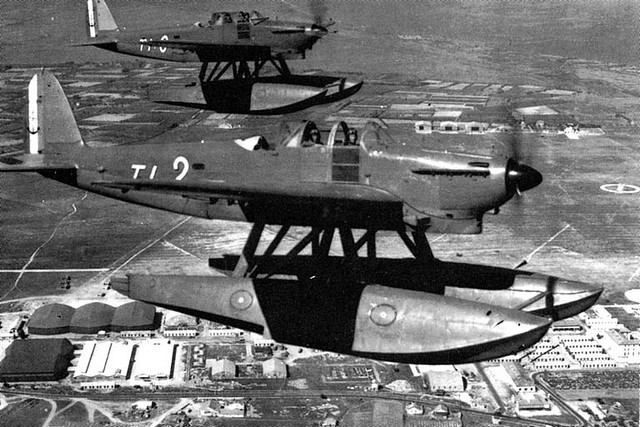
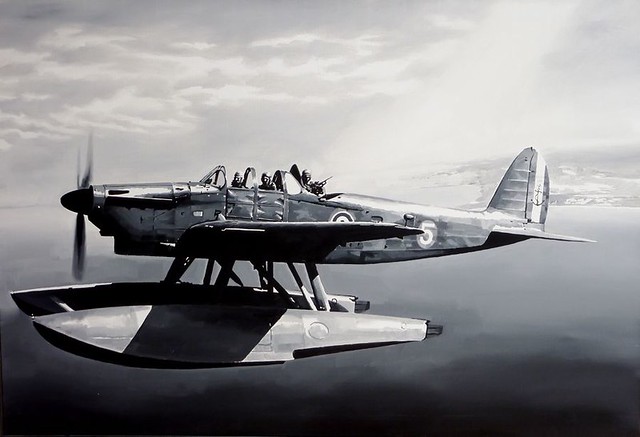
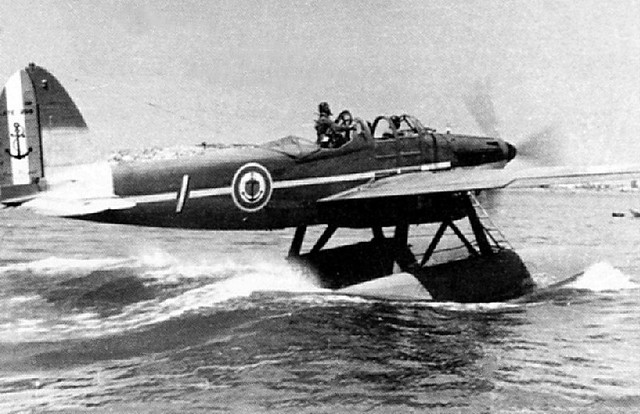
The design of the Latécoère 298 originated in a French Navy requirement for a torpedo bomber to replace the unsuccessful Laté 29 (below) that had just entered service.
The prototype Laté 298, as it came to be known, was completed at Latécoère's Toulouse plant in 1936 and first flew on 6 May 1936. It was designed as a single-engined, mid-wing cantilever monoplane, powered by an 880 hp Hispano-Suiza 12Y twelve-cylinder liquid-cooled engine. Two exceptionally large floats were attached to the fuselage by struts, each one containing a fuel tank.
A ventral crutch served to accommodate different payloads, depending on the mission. It could carry one Type 1926 DA torpedo, two 150 kg bombs or depth charges. Additional armament consisted of three 7.5 mm Darne machine guns, two fixed forward firing and one rear-firing on a flexible mount.
The first Laté 298s entered service in October 1938 with the Escadrilles (squadrons) of the Aéronautique Navale, the French Navy air force. Some were based in naval bases, and others on the seaplane tender Commandant Teste. At the outbreak of the war four squadrons flew with this aircraft, and by May 1940, when the German offensive in the west began, 81 aircraft equipped six squadrons.
The Laté 298s first saw action during the Battle of France in 1940. They were used at first for maritime patrol and anti-submarine duties, but did not meet any German ships. Later, as the Wehrmacht drove through France, they were used to harass and interdict armoured columns. Despite not having been designed for this role, they performed reasonably well, suffering fewer losses than units equipped with other types.
After the armistice of June 1940, the French Navy under the Vichy regime was allowed to retain some Laté 298 units, and captured aircraft were used by the Luftwaffe.
After Operation Torch, French units in Africa sided with the Allies. In this guise, the Laté 298 was used for Coastal Command missions in North Africa, in cooperation with Royal Air Force Wellingtons.

Artwork: Lucio Perinotto
Info: Wikipedia

Tuesday, June 19, 2012

Parnall Peto

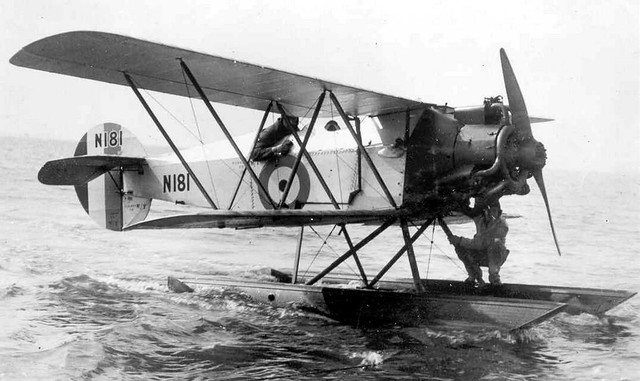
The Peto, submarine-launched floatplane, was amongst the most technically difficult tasks that Parnall took on. It was a two-seat reconnaissance float biplane of very small overall dimensions designed to be folded and carried in the confines of a submarine.
Of mixed wood, fabric, aluminium and steel construction, it had unequal span, warren-braced rectangular wings and the initial aircraft was powered by a 128hp Bristol Lucifer with mahogany plywood "Consuta" type floats.
Performance on test was generally satisfactory but modifications were put in hand and the machine was rebuilt with new wings, metal floats and a 169hp AS Mongoose engine.
Tests both on the sea and in the air showed that Bolas had fully met the requirements and it was officially judged to be exceptionally good; it was successfully catapult launched from the ill-fated submarine M2 but the concept of submarine carried aircraft died after the loss of the M2 which took with it one of the Petos.

Sunday, June 10, 2012

WAVES visiting USS Missouri

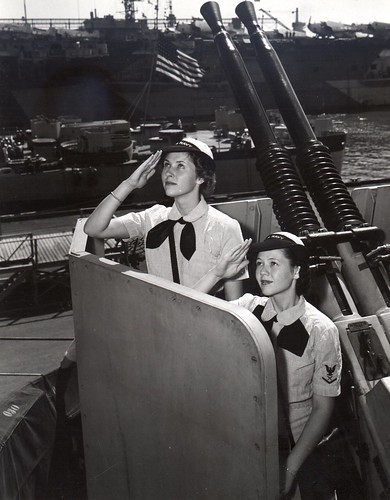
A pair of Women Accepted for Voluntary Emergency Service (WAVES), Yeoman Second Class Blanche Oswald of Philadelphia (left) and Yeoman Third Class Betty Martin of Danbury, Connecticut, salute the colors during a visit to USS Missouri (BB 63). They are standing next to one of the ship's 40mm gun mounts.

Saturday, June 2, 2012

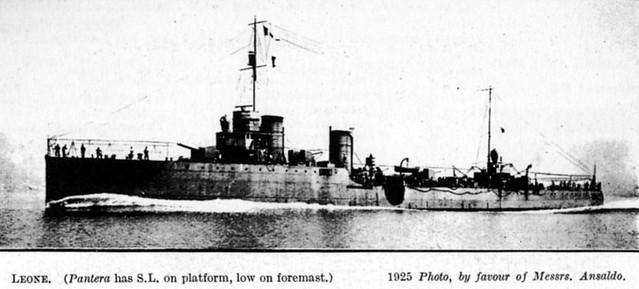
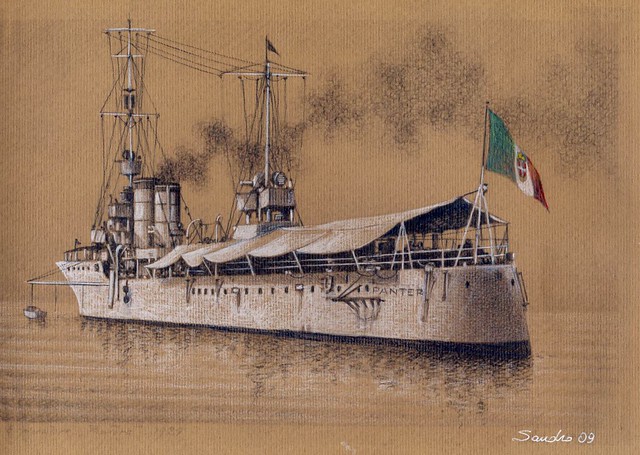
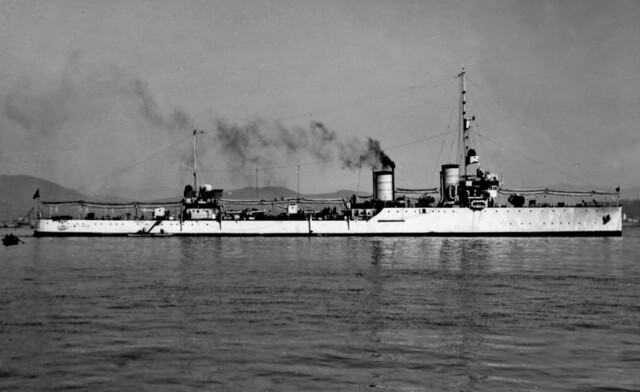
Leone Class Scouts

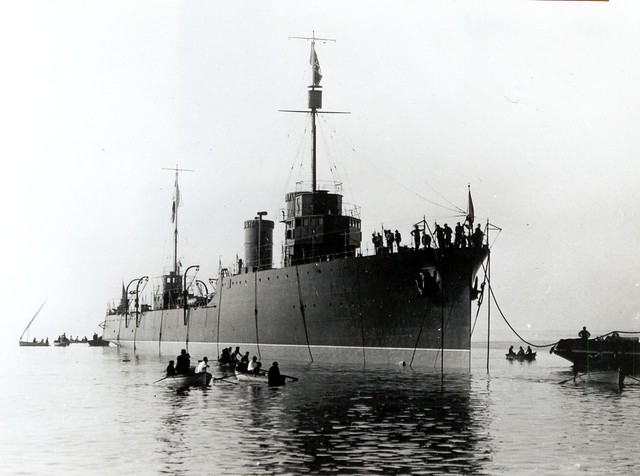
Leone, Pantera, and Tigre were designed as scout cruisers (esploratori), essentially enlarged versions of contemporary destroyers. They were initially ordered in 1917, but postponed due to steel shortages, and re-ordered in 1920.
Each ship of the class carried, for its size, an extremely heavy armament of eight 4.7-inch (120 mm) guns, paired into four powered turrets on the centre line. While only two guns could aim directly fore or aft, the all-eight-gun broadside was not matched by any other destroyer-type ship until the American Porter class destroyers of 1936.
The ships were outfitted for colonial service, and by 1935 they were deployed in the naval base of Massawa, Eritrea. The ships were reclassified as destroyers in 1938 and fought in WWII, when the Italian entry in the war left Italian East Africa isolated from Italy.
 The only appreciable action in which the destroyers were involved was the attack on the Allied convoy BN 7, on the first hours of 21 October 1940. Leone and Pantera, along with the Nullo and Sauro, shelled the convoy and its escort, inflicting some splinter damage to the leading transport ship, and launched at least two torpedoes aimed at HMAS Yarra, which successfully dodged them. The attack was nevertheless repulsed by the cruiser HMS Leander, who fired 129 six-inch rounds on the Italian destroyers.
The destroyers remained at dock in Massawa until the very end of ground operations in East Africa. Their commander ordered them to steam out on 31 March 1940, for a naval bombardment against targets around the Suez canal, in a mission without return. Leone ran aground off Massawa, and was sunk by her sister ships. After being spotted and harassed by British aircraft, Pantera and Tigre reached the Arabian shores, where their crews scuttled them.

Artwork: Sandro Degiani

(Source: Wikipedia)